Author: Rob

If you’ve been told that glaucoma management is primarily about lowering intraocular pressure, you’ve been given half the picture. This article maps the four upstream drivers of retinal ganglion cell death that operate largely independent of pressure — and the evidence-based clinical approach that follows from understanding them.

Why the IOP-Centric Model Is Incomplete

Glaucoma is the leading cause of irreversible blindness worldwide. Standard management focuses on intraocular pressure (IOP) reduction through topical medications, laser therapy, or surgery. This approach is supported by substantial evidence — IOP reduction slows disease progression. But it does not explain normal-tension glaucoma (NTG), in which optic nerve damage and visual field loss progress despite IOP in the statistically normal range.

NTG is not a rare edge case. It accounts for a significant proportion of glaucoma diagnoses, particularly in East Asian populations where it may represent the majority of cases. And patients on maximally tolerated IOP-lowering therapy frequently continue to lose vision.

The explanation is mechanistic: IOP is a risk factor. Retinal ganglion cell (RGC) death is the disease. Those are not the same thing. The upstream drivers of RGC apoptosis operate through pathways that pressure management alone cannot address.

The Four Upstream Domains

1. Mitochondrial/Metabolic Failure

RGC axons are among the highest energy-demanding structures in the body. The optic nerve head — the transition zone where axons go from unmyelinated to myelinated — is a region of exceptional mitochondrial density and ATP requirement. Anything that impairs mitochondrial function or NAD+-dependent energy production in those axons creates conditions for neurodegeneration.

NAD+ depletion in retinal tissue increases with age and has been directly validated as a therapeutic target. A published six-month clinical trial of nicotinamide supplementation in glaucoma patients demonstrated significant visual recovery — a result that would be impossible if IOP were the only mechanism. CoQ10 is reduced in glaucomatous retinal tissue. Citicoline (CDP-choline) has multiple clinical trials demonstrating RGC neuroprotection and improved visual evoked potential amplitudes. Alpha-lipoic acid provides mitochondrial cofactor support while regenerating CoQ10, glutathione, and both fat- and water-soluble antioxidants simultaneously.

2. Neuroinflammation and Autoimmunity

Microglial cells — the resident immune cells of the retina — can become chronically activated under oxidative stress and inflammatory conditions, releasing pro-inflammatory cytokines that directly promote RGC apoptosis independent of IOP.

A newly characterized autoimmune mechanism adds another dimension: molecular mimicry between bacterial heat shock proteins (HSPs) and human HSPs may trigger autoimmune responses targeting RGCs. This represents a significant conceptual shift — from glaucoma as a purely mechanical or vascular disease to one with immune-mediated neurodegeneration as a core mechanism.

Cannabinoids are now attracting research interest specifically for this mechanism, rather than for IOP reduction. CB2 receptor-mediated effects — neuroprotective, anti-inflammatory, and anti-apoptotic — act directly on the immune and neuronal pathways driving RGC death. CBN (cannabinol), a non-psychoactive cannabinoid, has emerging data showing superior RGC protection. Lutein and zeaxanthin provide dual antioxidant and anti-inflammatory retinal protection.

3. HPA Axis and Cortisol

This upstream driver is perhaps the most overlooked — and potentially the most clinically tractable. Glucocorticoid receptors are expressed in the trabecular meshwork, the primary structure through which aqueous humor drains from the eye. Chronic cortisol elevation activates these receptors, promoting extracellular matrix accumulation that stiffens the trabecular meshwork and impairs drainage — elevating IOP. This is the same mechanism that causes steroid-induced glaucoma, a well-recognized iatrogenic complication of long-term corticosteroid therapy.

The clinical implication: a patient with chronic HPA dysregulation — elevated and dysregulated cortisol, low DHEA-S — is producing an internal steroid environment that is actively driving trabecular meshwork dysfunction. HPA axis assessment is mechanistically indicated in glaucoma presentations, not ancillary. The Fluids-IQ SHP panel (diurnal cortisol x4, DHEA-S, cortisol/DHEA ratio, estradiol, progesterone, testosterone) provides the relevant data.

4. Autonomic Nervous System and Vascular Dysregulation

The vascular component is particularly prominent in NTG. The optic nerve head receives its blood supply from the posterior ciliary arteries, which are sensitive to autonomic tone. Sympathetic dominance promotes vasospasm of these vessels, reducing perfusion pressure at the most metabolically vulnerable point in the RGC axon.

Vascular dysregulation conditions — Raynaud’s phenomenon, cold extremities, migraine with aura — are significantly overrepresented in NTG populations, and their presence in a patient’s history should prompt direct assessment of ANS status and optic nerve head perfusion.

Magnesium functions as a physiological calcium channel blocker and has demonstrated IOP-independent visual field improvement in NTG clinical trials. Ginkgo biloba has one of the strongest evidence bases of any botanical compound in NTG, with multiple randomized controlled trials showing improved optic nerve perfusion and stabilization of visual field progression through nitric oxide-mediated vasodilation and platelet-activating factor antagonism.

The Clinical Sequencing Argument

These four domains are not parallel — they are hierarchical. The Systems Homeostasis framework sequences interventions by upstream signal priority:

  • HPA axis first: cortisol-driven trabecular meshwork dysfunction is upstream of IOP elevation. Addressing HPA terrain reduces the internal steroid load that impairs outflow and feeds inflammatory and ANS dysregulation.
  • ANS/vascular second: particularly critical in NTG presentations. Magnesium and Ginkgo biloba target optic nerve head perfusion directly. Vascular history guides this domain assessment.
  • Immune/inflammatory third: anti-inflammatory support, lutein and zeaxanthin, and CB2-mediated cannabinoid neuroprotection where appropriate reduce the microglial and autoimmune drivers of RGC apoptosis.
  • Mitochondrial stack fourth: nicotinamide (with CD38 inhibitory support if inflammatory burden is present), CoQ10, alpha-lipoic acid, and citicoline constitute the neuroprotective stack for RGC energy preservation.

The sequencing principle: RGC neuroprotection is receiver state dependent. A patient with active HPA dysregulation, vascular insufficiency, and neuroinflammation cannot maximally benefit from mitochondrial neuroprotective compounds. The upstream terrain determines the ceiling of the neuroprotective response.

The Formulation Intelligence Engine (FIE) maps this full upstream picture across all seven physiological systems before any intervention is sequenced. For complex glaucoma presentations — particularly NTG, treatment-resistant, or rapidly progressing cases — FIE-guided upstream assessment changes the clinical picture.

Biweekly Tuesday practitioner Zoom case file reviews for licensed and credentialed practitioners: Meeting ID: 408 034 5808 | Passcode: zPtx3V

Full Systems Homeostasis framework: roblamberton.com | Education and courses: roblamberton.com/education-and-courses


1. The common misunderstanding

Digestive dysfunction is commonly interpreted as a problem of insufficient stomach acid or digestive enzymes.

This interpretation leads naturally to supplementation.

But digestion is not simply a biochemical process.

It is a regulated physiological function governed by system signaling.


2. The stress-response signaling shift

When the body experiences chronic stress, the Hypothalamic–Pituitary–Adrenal Axis becomes persistently activated.

This produces sustained Cortisol signaling.

From a systems perspective, this represents a shift toward catabolic survival physiology.

The body prioritizes:

Energy mobilization
Glucose availability
Rapid response to threat

Digestive processes become secondary.


3. Why digestion shuts down

Digestive function relies heavily on parasympathetic signaling through the vagus nerve.

This signaling regulates:

Hydrochloric acid secretion
Pancreatic enzyme release
Bile flow
Gut motility
Nutrient absorption

But chronic stress produces sympathetic nervous system dominance.

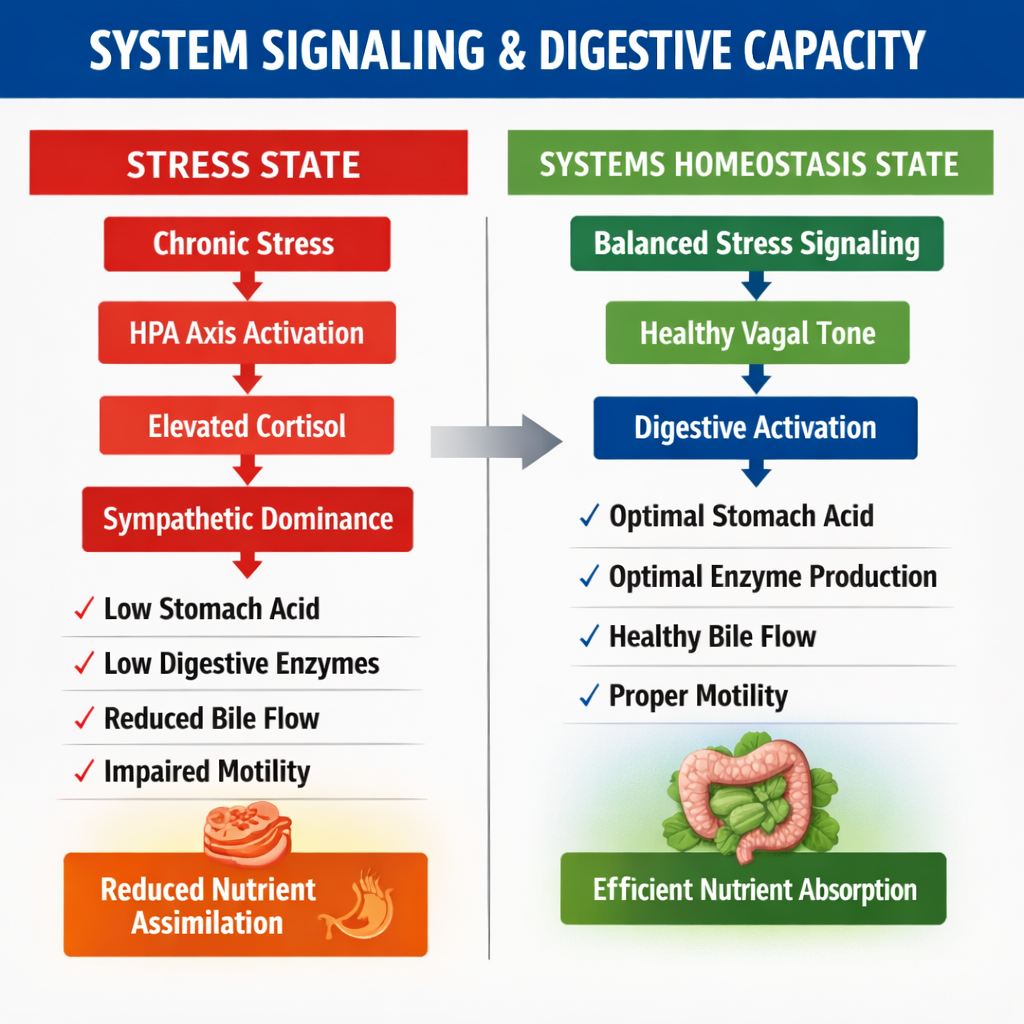
The signalling cascade becomes:

Chronic Stress

HPA Axis Activation

Elevated Cortisol

Sympathetic Dominance

Reduced Vagal Digestive Signaling

Reduced Digestive Capacity

In this environment, the digestive organs themselves are often structurally normal.

What has changed is the regulatory signaling environment.


4. The systems homeostasis perspective

From the perspective of Systems Homeostasis, digestive dysfunction is often downstream of broader regulatory imbalance.

Persistent stress signaling shifts physiology toward a catabolic state in which:

Repair is deprioritized
Nutrient assimilation declines
Structural maintenance is reduced

The digestive system is responding appropriately to the signals it receives.


5. Implications for intervention

Supplemental digestive enzymes or hydrochloric acid can sometimes provide short-term support.

But when the underlying signaling environment remains dominated by chronic stress physiology, these interventions may only partially restore digestive capacity.

Supporting digestion therefore often requires addressing the regulatory systems that govern digestive signaling, including:

Circadian rhythm regulation
Nervous system balance
Metabolic stability
Stress physiology

When the signaling environment shifts back toward parasympathetic regulation, digestive capacity frequently improves.


6. The key takeaway

Digestive dysfunction is not always a failure of digestive chemistry.

It is often a reflection of system signaling priorities.

When the body remains in a chronic catabolic stress state, digestion becomes secondary to survival.

Restoring digestive capacity therefore involves restoring the conditions of physiological regulation that allow the digestive system to function normally.

“This article is part of the Ingredient Intelligence™ series exploring how nutrients and compounds interact with physiological signaling and systems regulation.”

✴️ Work With Me

If you are developing nutritional supplements, botanicals, or functional beverages, I provide formulation strategy grounded in systems physiology and real-world clinical application.

HealthspanFormulations.com

For individuals and practitioners seeking clinical consulting rooted in systems homeostasis, metabolic regulation and adaptive capacity – not symptom chasing – my clinical services are available at:

OptimumHealthConsulting.com

Monday Morning Market Report

Nutritional Supplements & Functional Drinks

March 2, 2026

Each week the nutritional supplement and functional beverage industry provides a snapshot of where consumer demand, ingredient innovation, and product formulation are heading.

The signals emerging this week point toward one clear theme:

The convergence of metabolic health, convenience, and functional delivery systems.

The line between supplements, beverages, and everyday foods continues to blur.

Here are the developments worth paying attention to.


1. Gut Health Continues to Dominate Innovation

Gut health remains one of the most active innovation spaces in the supplement industry.

Recent product launches and formulation strategies increasingly target the gut–brain axis, linking digestive health to mood, cognition, and metabolic regulation.

Brands launching new microbiome-focused formulations include companies such as Daily Nouri, O Positiv, and Cymbiotika, each emphasizing combinations of:

  • Prebiotic fibers
  • Next-generation probiotics
  • Postbiotics
  • Gut-supporting amino acids such as L-glutamine

Rather than simple digestive products, these formulations are now positioned as system-wide metabolic and neurological support tools.

For formulators, this trend reinforces an important shift: microbiome support is no longer a niche digestive category—it is becoming a central platform for multiple health claims.


2. Creatine Expands Beyond Sports Nutrition

Creatine continues to move rapidly beyond its traditional bodybuilding audience.

Increasingly, creatine is being positioned for:

  • Cognitive performance
  • Women’s health
  • Healthy aging
  • General metabolic support

Market projections suggest the global creatine market could reach approximately $4.2 billion by 2030, reflecting its growing acceptance as a general wellness compound rather than a purely athletic supplement.

One notable shift is the rapid expansion of consumer-friendly formats, including gummies, sachets, and functional beverage integrations.

For product developers, creatine now represents one of the few ingredients with strong clinical credibility that can be repositioned across multiple categories.


3. Healthy Aging Ingredients Continue Their Rise

Several ingredients associated with longevity and cellular metabolism continue gaining momentum in the supplement industry.

Among the most discussed in current product development pipelines:

  • NMN and NAD-related compounds
  • Shilajit
  • Sea moss

Companies such as Layn Natural Ingredients are expanding the NAD pathway category, preparing high-purity NAD ingredients alongside their existing NMN offerings.

This reflects a broader industry movement toward healthy aging formulations that target mitochondrial health, metabolic resilience, and cellular repair pathways.

Rather than single ingredients, many companies are now building multi-pathway longevity stacks.


4. Functional Beverages Move Beyond Hydration

Functional beverages continue evolving from simple hydration products into targeted health delivery systems.

Industry trend reports now describe this shift as “Beverages with Purpose.”

These drinks are increasingly formulated to support:

  • Energy and focus
  • Stress resilience
  • Immune health
  • Metabolic regulation
  • Gut health

Key ingredients currently driving beverage innovation include:

Adaptogens

  • Ashwagandha
  • Reishi

Nootropics

  • L-theanine
  • Lion’s mane mushroom

Microbiome support

  • Probiotics
  • Prebiotic fibers

At the same time, large beverage companies are entering the category with functional soda products, signaling that gut-health drinks may soon compete directly with traditional soft drinks.


5. Protein Innovation Responds to GLP-1 Demand

One of the most interesting formulation shifts is being driven by the rise of GLP-1 medications.

Consumers using these medications often require higher nutrient density in smaller volumes, which is influencing product development across both supplements and functional beverages.

Ingredient companies are responding.

For example, Roquette recently introduced NUTRALYS Pea 850F, a new pea protein isolate designed to solve one of the major challenges in plant protein products: off-flavor and bitterness.

Improved sensory profiles could significantly expand the use of plant proteins in:

  • Ready-to-drink protein beverages
  • Functional meal replacements
  • High-protein snack foods

6. Stress and Cortisol Support Products Expand

Stress management formulations continue to see strong growth.

One product attracting attention ahead of Expo West 2026 is CAVU Nutrition’s ThymoQuin Cortisol Support, built around TriNutra’s standardized black seed extract.

Clinical research suggests this ingredient may support reductions in cortisol while improving sleep and mood markers.

This reflects the broader rise of what some analysts call the “Anxiety Economy,” where consumers increasingly seek nutritional solutions for stress resilience.

Common ingredients appearing in these products include:

  • Saffron extract
  • Adaptogenic botanicals
  • Probiotics
  • Polyphenol-rich extracts

7. Regulatory Pressure Is Increasing

While innovation continues at a rapid pace, the regulatory environment is tightening.

In the United States, the FDA is signaling increased scrutiny of self-GRAS ingredient designations and NDIN pathways.

This could raise the barrier to entry for smaller supplement brands relying on novel ingredients without robust safety documentation.

For the industry, this means that clinical evidence, regulatory compliance, and ingredient transparency will become increasingly important competitive advantages.


Final Thoughts

Taken together, this week’s developments highlight several structural trends shaping the future of nutritional products:

• Gut health is evolving into a multi-system metabolic platform
• Creatine is transitioning into mainstream wellness and cognitive health
• Functional beverages are becoming health delivery systems
• GLP-1 medications are reshaping nutrient density requirements
• Healthy aging ingredients are driving longevity-focused product design

For formulation scientists, practitioners, and product developers, the opportunity lies in designing products that combine clinical credibility, sensory performance, and consumer convenience.

The next generation of supplements and functional beverages will likely emerge at the intersection of those three forces.


Work With Me

If you are a clinic, practitioner, or company developing nutritional supplements, botanicals, or functional beverages, I provide formulation strategy and development grounded in systems physiology and real-world clinical application.

HealthspanFormulations.com

For individuals or practitioners seeking clinical consulting rooted in systems homeostasis and metabolic regulation:

OptimumHealthConsulting.com


#ProductFormulation
#NutraceuticalInnovation
#FunctionalBeverages
#SupplementIndustry
#GutHealth
#HealthyAging
#SportsNutrition
#FunctionalMedicine
#RobLamberton
#RobertLamberton

Monday Morning Market Report

23 February 2026 | The Global Shift Toward Cellular Governance

The supplement and functional beverage industry is undergoing a structural reorganization.

This is not just about new SKUs.

It is about a shift in how physiology is being framed.

Over the past 4–6 weeks, three converging forces have become unmistakable:

  1. Longevity has gone mainstream — and younger.
  2. Delivery systems are becoming the primary differentiator.
  3. Stress, mitochondrial function, and women-centered formulations are leading portfolio design.

1️⃣ The Age-Agnostic Longevity Expansion

Longevity is no longer marketed as anti-aging for retirees.

It is being positioned as:

  • Energy preservation
  • Cognitive resilience
  • Mitochondrial efficiency
  • Structural integrity
  • Beauty-from-within

Recent launches illustrate this:

  • Jupiter Neurosciences — Nugevia
    A longevity line targeting mitochondrial health, brain clarity, and beauty.
  • Nestlé Health Science — Healthy aging expansion
    Corporate-scale investment into mitochondrial positioning.
  • AdvaCare Pharma — AdvaLife™ Longevity Range
    Autophagy and metabolic signaling language entering mainstream product lines.

The language is evolving from “anti-aging” to “metabolic governance.”

That subtle shift changes everything.


2️⃣ Delivery Technology Is Now the Competitive Edge

Capsules are stable — but no longer exciting.

What’s expanding:

  • Creatine gummies
  • Iron gummies
  • Magnesium gummies
  • Omega-3 gummies
  • Electrolyte gummies
  • Protein shots
  • Protein sodas
  • Collagen dairy beverages
  • Functional RTDs

Delivery examples:

  • The Vitamin Shoppe x Specnova
    Encapsulation-driven creatine beadlets.
  • Roquette — NUTRALYS® Pea 850F
    Taste-first pea isolate engineered for beverage scalability.
  • Beyond Meat
    Protein soda entering the carbonated beverage category.
  • Bioiberica + Lactalis
    Collagen embedded into dairy formats.

We are witnessing the “Format War.”

Absorption science, palatability, stability, and consumer compliance are becoming market moats.


3️⃣ Women-Centered Portfolio Architecture

January 2026 European launches show coordinated development around:

  • Female creatine
  • Iron + collagen combinations
  • Hormone-informed probiotics
  • Peri-menopause support
  • Performance + beauty integration

This is not token inclusion.

It is strategic category architecture.


4️⃣ Stress & HPA Axis Formulations Continue Expanding

  • CAVU Nutrition — ThymoQuin Cortisol Support
    Standardized black cumin extract positioned for stress, sleep, and metabolic balance.

Stress resilience is becoming a primary commercial narrative.


2026 Category Acceleration Map

High-growth segments:

  • Creatine beyond sport
  • Longevity & mitochondrial support
  • Gut health & postbiotics
  • Nootropics
  • Nitric oxide
  • Hydration/electrolytes
  • Beauty-from-within
  • Adaptogens
  • Functional beverages

But here is the deeper pattern:

The innovation is no longer just ingredient-driven.

It is systems-positioning driven.

Brands are moving toward structured signaling logic — even if they don’t explicitly call it that.


Strategic Conclusion

The companies winning in 2026 will combine:

  • Cellular-level positioning
  • Delivery innovation
  • Clean-label transparency
  • Age-inclusive messaging
  • Structured portfolio architecture

We are not in a capsule race.

We are in a metabolic resilience race.

If you are a clinic, practitioner, or company developing nutritional supplements, botanicals, or functional products, I provide formulation strategy and development grounded in systems physiology and real-world clinical application.
👉 HealthspanFormulations.com

For individuals and practitioners seeking clinical consulting rooted in systems homeostasis, metabolic regulation, and adaptive capacity—not symptom chasing—my clinical services are available at:
👉 OptimumHealthConsulting.com

#ProductFormulation #FunctionalMedicine #NutraceuticalInnovation #RobLamberton #RobertLamberton

Substrate Availability, Signalling Fidelity, and Systems Throughput

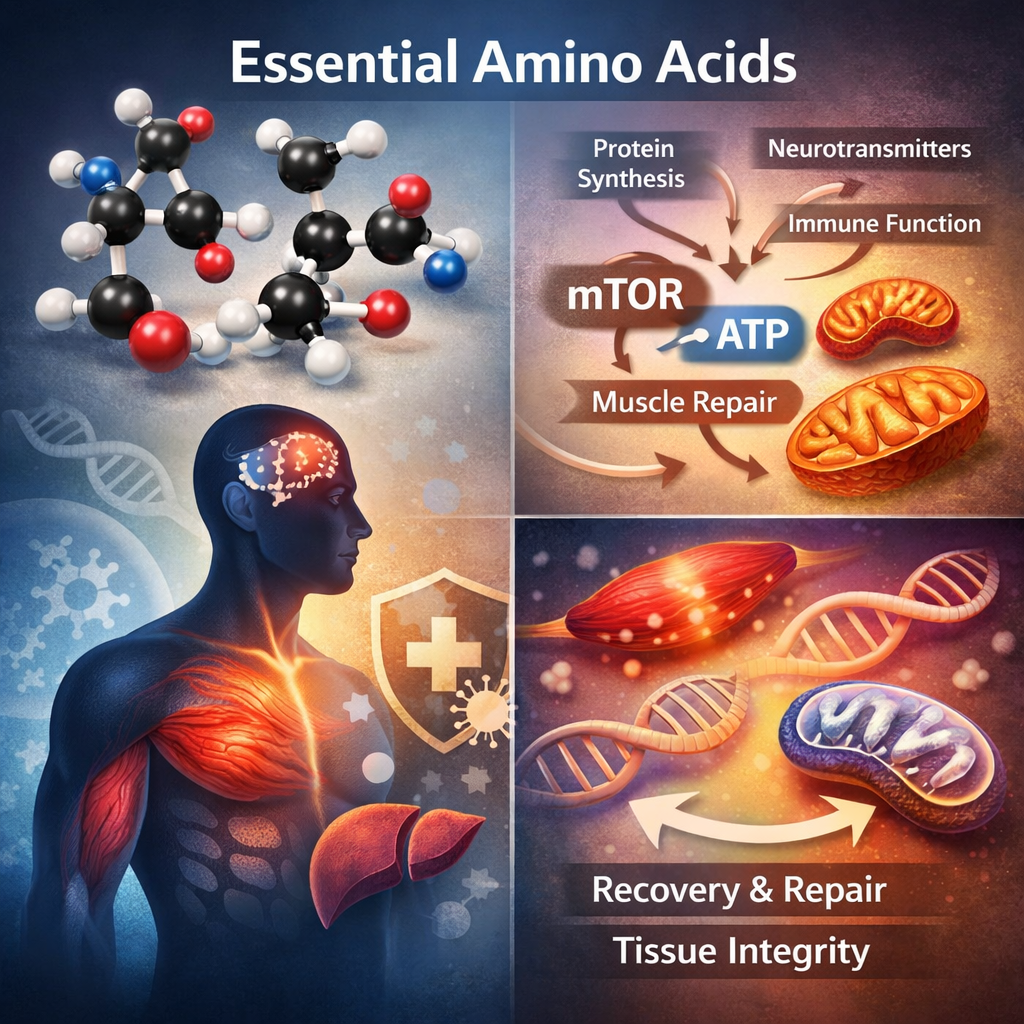
Essential amino acids (EAAs) are often discussed in the context of muscle growth or athletic performance. From a systems homeostasis perspective, this framing is incomplete and frequently misleading.

EAAs are not performance agents.

They are foundational substrates that determine whether the body can maintain structure, complete repair, and sustain adaptive capacity.

They do not initiate change.

They determine whether change can finish.


Essential Amino Acids as a Systems Constraint

A biological system cannot express resilience without material availability.

In states of:

  • chronic psychological or physiological stress
  • aging
  • illness or recovery
  • inflammatory load
  • under-eating
  • impaired digestion
  • metabolic rigidity

…the primary limitation is often not signalling, motivation, or hormonal drive. It is substrate access.

Tissue repair, enzyme production, immune turnover, neurotransmitter synthesis, and mitochondrial protein renewal all require essential amino acids. When availability is insufficient, the system compensates by reallocating internal resources — most commonly through tissue breakdown.

This is not a deficiency model.

It is a capacity erosion model.


Protein Intake Is Not the Same as Amino Acid Availability

Whole protein intake is frequently assumed to equal amino acid sufficiency. Physiologically, this assumption often fails.

Whole proteins require:

  • adequate gastric acid
  • sufficient protease activity
  • intact intestinal absorption
  • hepatic processing capacity

In many individuals — particularly those under stress, aging, inflamed, or ill — these steps are rate-limiting.

EAAs reduce friction in the system:

  • minimal digestive burden
  • predictable absorption
  • direct availability for synthesis and repair

From a systems standpoint, EAAs function as low-complexity building inputs when upstream access is constrained.

This is not optimization.

It is structural triage.


Signalling Without Substrate Is Unproductive

Modern health culture places enormous emphasis on signalling:

  • training stimuli
  • metabolic stress
  • hormonal cues
  • pathway activation (mTOR, AMPK, etc.)

Signalling without substrate does not produce adaptation.

It produces incomplete work.

Without adequate EAAs:

  • training becomes catabolic
  • recovery stalls
  • immune turnover slows
  • detoxification pathways falter
  • structural integrity declines

This is why individuals can be “doing everything right” and still deteriorate.

The signal is present.

The materials are not.


Aging, Illness, and Amino Acid Economics

With aging, several predictable shifts occur:

  • reduced appetite
  • impaired digestion
  • anabolic resistance
  • increased inflammatory tone
  • slower protein turnover

In illness and recovery states:

  • amino acid demand increases
  • immune and tissue turnover accelerates
  • tolerance for large protein loads often declines

In these contexts, EAAs may function as:

  • anti-catabolic support
  • repair permission
  • structural insurance

Not to build more — but to lose less.

This distinction is critical.


EAAs and Metabolic Flexibility

EAAs sit downstream of metabolic flexibility.

They do not force adaptation.

They allow adaptation to complete once the system is ready.

In flexible systems, EAAs support recovery and rebuilding.

In constrained systems, they may reduce tissue loss — but they cannot override poor sequencing.

They are supportive substrates, not corrective interventions.


What EAAs Do Not Fix

From a systems homeostasis perspective, EAAs do not:

  • repair digestive dysfunction
  • override stress dominance
  • correct sleep disruption
  • compensate for inflammatory overload
  • replace whole-food nutrition
  • resolve sequencing errors

Used incorrectly, EAAs delay recognition of deeper constraints.

Used correctly, they preserve capacity so recovery can proceed without additional burden.


Systems Takeaway

Essential amino acids are not about enhancement.

They are about structural permission.

They determine whether the system can:

  • repair
  • adapt
  • maintain
  • or must cannibalize itself to survive

This is why EAAs belong exactly where they sit in the Ingredient Intelligence™ sequence:

after digestive capacity

after metabolic flexibility

as substrates for rebuilding — not signalling


Ingredient Intelligence™ Summary

  • EAAs are substrates, not stimulants
  • They support completion of repair, not initiation
  • Their value increases as digestive and adaptive reserve decline
  • They cannot compensate for poor sequencing
  • Properly used, they preserve systems capacity

Formulation & Product Development

If you are a clinic, practitioner, or company developing nutritional supplements, amino acid formulations, or functional products, I provide formulation strategy and product development grounded in systems physiology and real-world clinical application.

👉 HealthspanFormulations.com


Clinical Consulting

For individuals and practitioners seeking clinical consulting rooted in systems homeostasis, metabolic regulation, and adaptive capacity — not symptom chasing, my clinical services are available at:

👉 OptimumHealthConsulting.com


#IngredientIntelligence

#SystemsHomeostasis

#ClinicalNutrition

#AminoAcids

#ProductFormulation

#NutraceuticalInnovation

#FunctionalMedicine

#RobLamberton

#RobertLamberton