Author: Rob

Ingredient Intelligence™ — Signal Modulators Series
Why Taurine Matters (Systems View)

Taurine is often mislabeled as a stimulant ingredient because of its association with energy drinks. In reality, taurine functions as the opposite of stimulation.

Taurine is best understood as a cellular stabilizer — a compound that:

  • buffers excessive signalling,
  • protects membranes and mitochondria,
  • and improves tolerance to metabolic and inflammatory stress.

From a Systems Homeostasis perspective, taurine does not “push” physiology forward.

It prevents systems from being pushed too far.


Core Biological Roles (Non-Exhaustive)

1. 

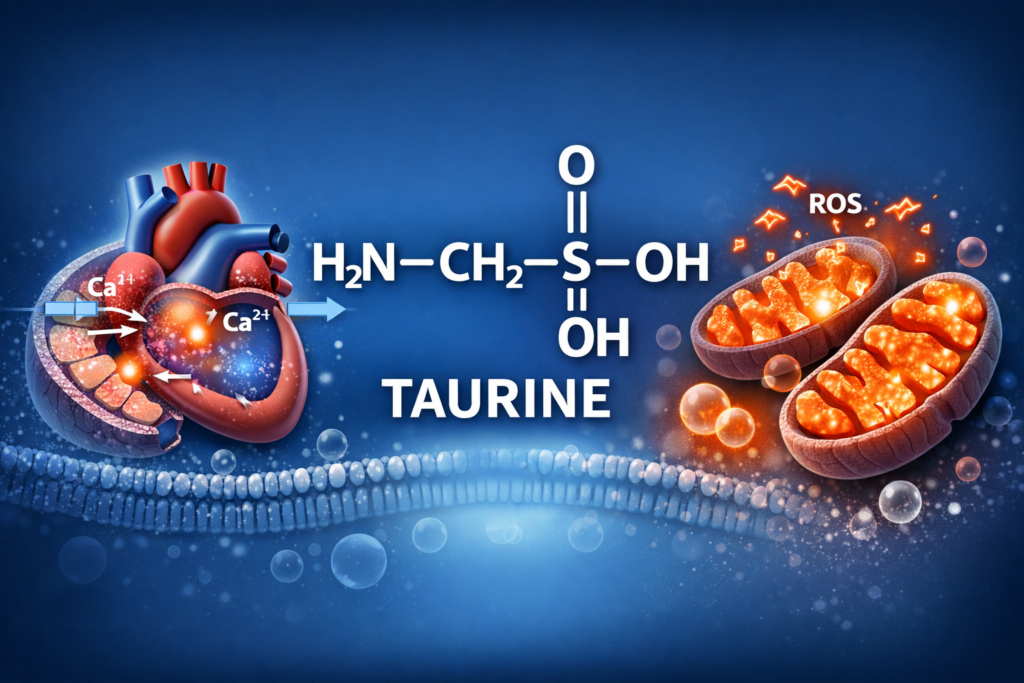
Calcium Signalling Regulation

Taurine modulates intracellular calcium handling, particularly in:

  • cardiomyocytes,
  • neurons,
  • skeletal muscle.

This has downstream effects on:

  • contractility,
  • excitability,
  • arrhythmia risk,
  • and neuromuscular stability.

Systems implication:

Taurine reduces signal overshoot — not signal initiation.


2. 

Osmoregulation & Membrane Integrity

Taurine acts as a compatible osmolyte, helping cells:

  • maintain volume,
  • preserve membrane fluidity,
  • tolerate inflammatory or oxidative environments.

This is especially relevant under:

  • chronic stress,
  • hyperglycaemia,
  • ischemia,
  • infection-related inflammation.

3. 

Mitochondrial Protection

Taurine supports mitochondrial function by:

  • reducing oxidative stress,
  • stabilizing electron transport chain activity,
  • protecting mitochondrial membranes.

Key point:

This improves resilience, not maximal ATP output.


4. 

Bile Acid Conjugation & Metabolic Signalling

Taurine conjugates bile acids, influencing:

  • fat digestion,
  • gut–liver signalling,
  • metabolic regulation.

In compromised systems, this improves signal clarity, not digestive force.


Taurine in Metabolic Dysregulation

Research consistently shows taurine is associated with:

  • improved insulin sensitivity,
  • reduced inflammation,
  • improved lipid handling,
  • improved cardiovascular resilience.

But the mechanism is not “metabolic acceleration.”

It is signal dampening + cellular protection.

This is why taurine:

  • performs well in metabolic syndrome,
  • supports cardiovascular health,
  • improves tolerance to stress states.

Taurine & the Nervous System

Taurine interacts with:

  • GABAergic signalling,
  • glycine receptors,
  • inhibitory tone modulation.

Clinical implication:

Taurine supports neural braking systems, particularly in individuals with:

  • sympathetic dominance,
  • cortisol dominance,
  • anxiety with metabolic stress,
  • sleep disruption driven by hyperarousal.

This makes taurine a stabilizer, not a sedative.


Placement in the Ingredient Intelligence™ System

Functional Role:

Signal Stabilization & Cellular Protection

Primary Systems Influenced:

  • Cardiovascular
  • Neurological
  • Metabolic
  • Hepatic–digestive interface

What Taurine Is NOT

  • Not a stimulant
  • Not a performance enhancer
  • Not a shortcut to energy

What Taurine Supports

  • Tolerance
  • Resilience
  • Signal proportionality
  • Recovery capacity

Clinical Framing (Important)

Taurine is best conceptualized as a capacity-supporting compound.

It is most appropriate when:

  • signalling is excessive,
  • systems are reactive,
  • metabolic stress is present,
  • resilience is reduced.

It is not a substitute for:

  • sleep restoration,
  • stress load reduction,
  • nutritional rhythm,
  • digestive access.

Ingredient Intelligence™ Takeaway

Taurine does not make systems work harder.

It helps systems stop overreacting.

In an era where overstimulation drives pathology, taurine’s value lies in restoring proportional response, not pushing output.

Work With Me

Formulation & Product Development

HealthspanFormulations.com

Clinical Consulting

OptimumHealthConsulting.com

#IngredientIntelligence #SignalModulators #Taurine #SystemsHomeostasis #MetabolicHealth #CardiovascularHealth #RobLamberton #RobertLamberton

❇️ Ingredient Intelligence™

A systems-first series examining nutrients and compounds as signals, not isolated fixes — always through the lens of context, capacity, and adaptive reserve.
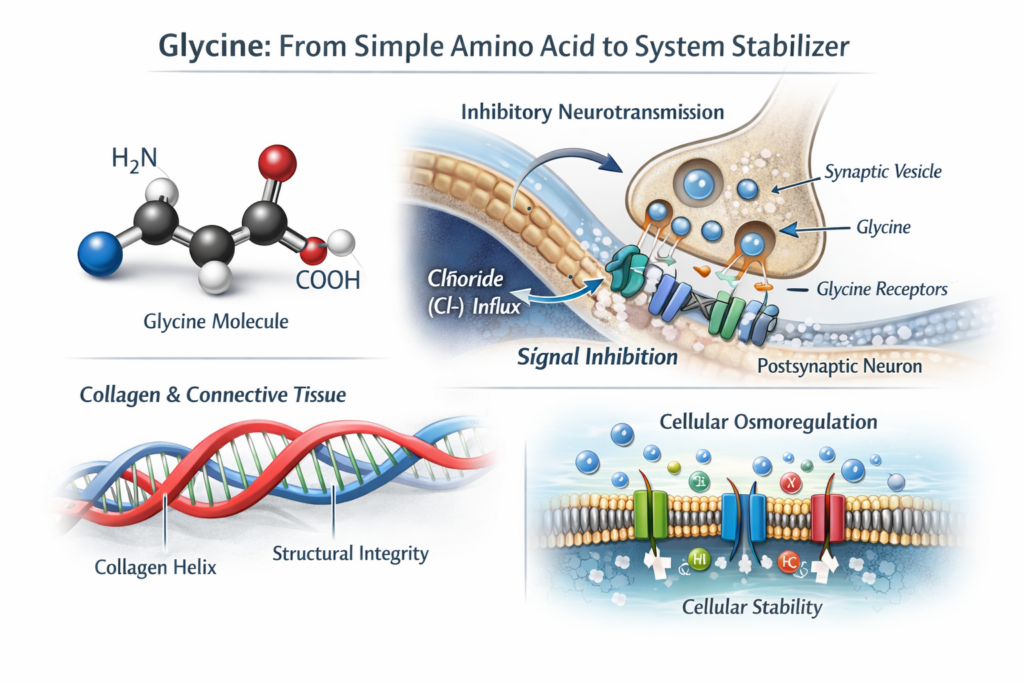
Ingredient Intelligence™ Vol. 4.75

Glycine is often dismissed as a minor, non-essential amino acid—something structural, supportive, and unremarkable. That view misses its real role.

From a systems homeostasis perspective, glycine is less about “doing more” and more about allowing systems to settle, integrate, and resolve signals appropriately.

Glycine as a Signalling Modulator

Physiology is governed not just by excitatory signals, but by the ability to contain and resolve them. Glycine functions as an inhibitory co-signal across multiple systems, helping define thresholds rather than pushing outcomes.

In the nervous system, glycine contributes to inhibitory tone, shaping how signals are interpreted rather than amplified. This matters because many modern stress patterns are not driven by a lack of stimulation, but by impaired signal dampening.

More excitation is rarely the answer when tolerance is already narrow.

Structural Roles That Influence Signalling

Glycine is a major constituent of collagen and connective tissue. This is not merely structural trivia. Tissue integrity influences circulation, mechanotransduction, and intercellular communication. When structure is compromised, signalling becomes distorted—often louder, more inflammatory, and less precise.

By supporting connective tissue integrity, glycine indirectly supports signal clarity and delivery, not by force, but by maintaining the medium through which signals move.

Osmoregulation, Cellular Calm, and Recovery

At the cellular level, glycine participates in osmotic balance and cytoprotective processes. These functions help cells maintain volume, membrane stability, and internal order under stress.

In systems terms, this is containment—the ability to remain coherent under load.

Containment precedes adaptation. Without it, signalling becomes chaotic and recovery stalls.

Why Glycine Matters in a Signalling-Saturated World

Many individuals today live in a state of persistent signalling pressure: metabolic, inflammatory, neurological, and psychological. In this context, adding more “drivers” often backfires.

Glycine represents the opposite philosophy:

  • not escalation
  • not optimization
  • but restoration of signal boundaries

It supports the system’s ability to decide appropriately, rather than react indiscriminately.

A Systems Takeaway

Glycine’s value is not that it stimulates change, but that it permits resolution.

From a systems homeostasis lens, resilience depends as much on inhibitory capacity as on activation. Systems fail not only when signals are too weak—but when they cannot be turned off.

Glycine reminds us that sometimes the most powerful intervention is the one that reduces noise, preserves tolerance, and allows physiology to return to baseline on its own terms.


Ingredient Intelligence™ is a systems-first series exploring how nutrients and compounds function as signals, not isolated fixes—always through the lens of context, capacity, and adaptive reserve.

Formulation & Systems Consulting

If you are a clinic, practitioner, or company developing nutritional supplements, botanicals, or functional products, I provide formulation strategy and development grounded in systems physiology and real-world clinical application.

👉 HealthspanFormulations.com

Clinical Consulting

For individuals and practitioners seeking clinical consulting rooted in systems homeostasis, metabolic regulation, and adaptive capacity—not symptom chasing—my clinical services are available at:

👉 OptimumHealthConsulting.com

#IngredientIntelligence #SystemsHomeostasis #SignalIntegrity #AdaptiveCapacity #PhysiologicalResilience #AminoAcids #ClinicalReasoning #FormulationScience #FunctionalMedicine #NutraceuticalInnovation #RobLamberton #RobertLamberton

🧠 Ingredient Intelligence™ Vol. 4.25

For decades, lactate has been misunderstood.

It has been framed as:

  • A byproduct of poor oxygen delivery
  • A marker of fatigue
  • Something the body needs to “clear”

Modern physiology tells a very different story.

Lactate is not waste.

Lactate is a signal.

And in the brain, it is a neurotrophic signal.


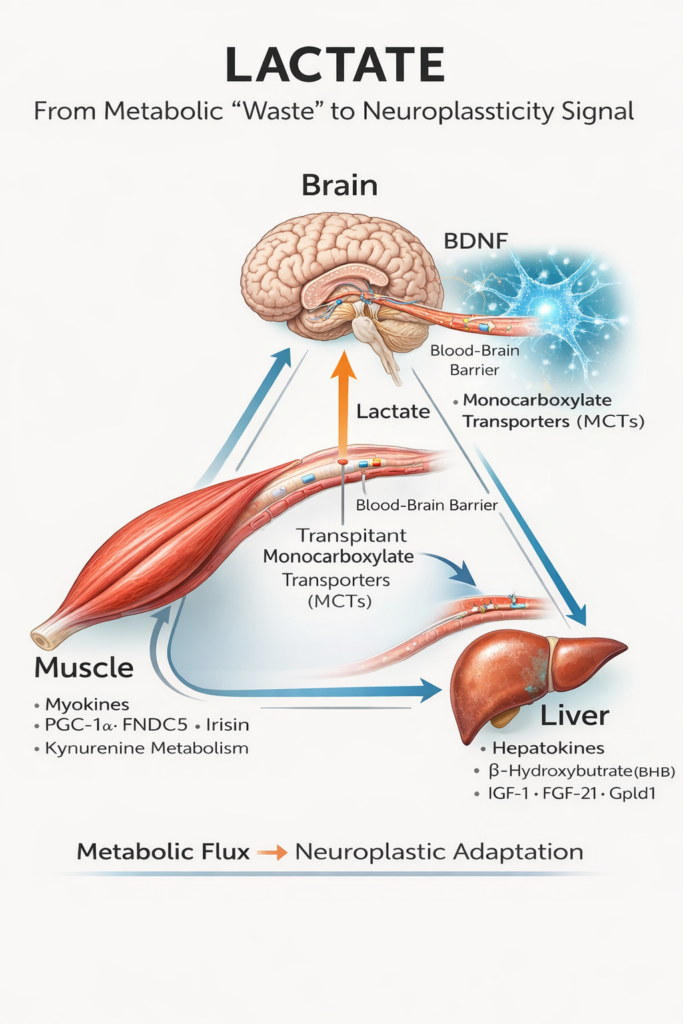
1. Lactate Is Actively Transported Into the Brain

During physical exertion, skeletal muscle produces lactate as a normal consequence of glycolytic flux.

Rather than accumulating uselessly, lactate:

  • Enters circulation
  • Crosses the blood–brain barrier via monocarboxylate transporters (MCTs)
  • Is preferentially taken up by neurons and astrocytes

This transport is regulated, not accidental.

When lactate transport is blocked, the downstream brain effects disappear.


2. Lactate Directly Activates BDNF Gene Expression

Once inside the brain—particularly the hippocampus—lactate acts as a metabolic signal that:

  • Activates transcriptional pathways
  • Increases BDNF gene expression
  • Enhances synaptic plasticity and neurogenesis

This is not motivational language.

It is molecular signaling.

When lactate signaling is blocked, exercise fails to induce neuroplastic adaptations.


3. Lactate Is a Coordination Signal, Not Just Fuel

Lactate can be oxidized by neurons — but fuel delivery is not its primary importance.

Its dominant role is informational:

  • Signaling energetic demand
  • Coordinating peripheral effort with central adaptation
  • Linking muscle activity to brain remodeling

Lactate functions as part of a distributed communication network between muscle, liver, and brain.


4. Why This Matters Clinically

From a systems-homeostasis perspective:

  • Chronically avoiding metabolic challenge reduces adaptive signaling
  • Cognitive resilience depends on signal integrity, not comfort
  • Supplements cannot replace missing physiological inputs

This explains why:

  • “Exercise mimetics” underperform
  • Nutrients alone fail to restore cognition or mood
  • Neuroplasticity declines in low-signal environments

5. Lactate in Context — Not in Isolation

Lactate does not act alone.

It operates alongside other exercise-induced signaling molecules, including:

  • β-Hydroxybutyrate (BHB) — a liver-derived gene-regulating signal
  • Irisin (FNDC5 pathway) — a muscle-derived neurotrophic messenger


The Takeaway

The body does not merely burn fuel.

It communicates through metabolism.

The brain does not simply respond to nutrients.

It adapts in response to signals generated by action.

Lactate is one of those signals — and without it, adaptive brain biology breaks down.


📌

Formulation / Product Development

If you are a clinic, practitioner, or company developing nutritional supplements, botanicals, or functional products, I provide formulation strategy and development grounded in systems physiology and real-world clinical application.

👉 HealthspanFormulations.com

Clinical Consulting

For individuals and practitioners seeking clinical consulting rooted in systems homeostasis, metabolic regulation, and adaptive capacity — not symptom chasing — my clinical services are available at:

👉 OptimumHealthConsulting.com


🔖

#IngredientIntelligence

#SystemsHomeostasis

#Neuroplasticity

#MetabolicSignaling

#BDNF

#ExerciseBiology

#FunctionalNutrition

#NutraceuticalScience

#RobLamberton

#RobertLamberton

✴️ INGREDIENT INTELLIGENCE™ | VOL. 4.5

Hydrochloric Acid & Digestive Enzymes

Most nutrition conversations assume a simple equation:

what you consume = what your body uses.

But biology doesn’t work that way.

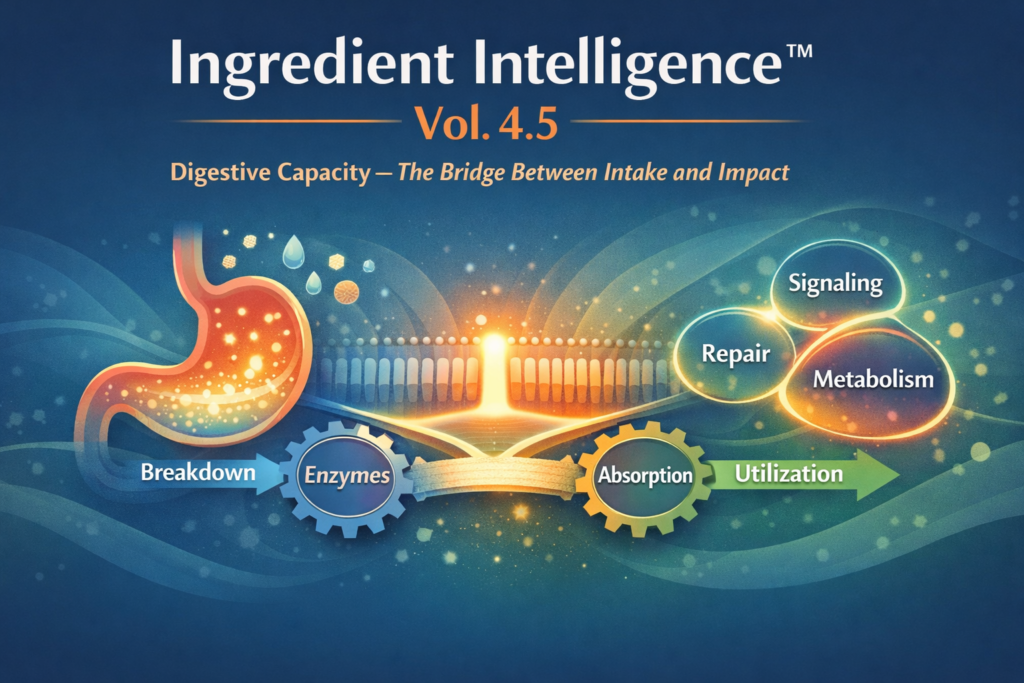
Between intake and impact sits a critical, often-overlooked system: digestive capacity.


Why Digestive Capacity Matters

Digestive capacity determines whether food and supplements ever become biologically available substrates. Without sufficient breakdown, signaling and absorption never fully occur — regardless of diet quality or supplement sophistication.

This is why two individuals can consume identical meals and experience radically different outcomes.

From a systems homeostasis perspective, digestion is not about symptoms like bloating or reflux. It is about throughput — the system’s ability to convert external inputs into usable internal signals and structures.


Hydrochloric Acid: The Gatekeeper Signal

Stomach acid is more than a digestive fluid. It is a coordination signal.

Adequate hydrochloric acid:

  • initiates protein denaturation
  • triggers downstream enzyme release
  • supports mineral ionization (iron, zinc, calcium, magnesium)
  • provides antimicrobial containment
  • signals appropriate gastric emptying

Low or inconsistent acid disrupts this entire cascade, increasing signal noise throughout the GI–immune–metabolic axis.


Digestive Enzymes: Throughput, Not Stimulation

Digestive enzymes do not “boost” digestion — they restore mechanical efficiency.

Their role is to:

  • complete macronutrient breakdown
  • reduce fermentable residue
  • lower immune activation from partially digested substrates
  • improve substrate availability for tissue repair and energy production

In systems terms, enzymes reduce processing friction, allowing digestion to occur with less compensatory stress.


Why This Is a Bridge Volume

Volume 4.5 exists for a reason.

Neurotrophic signaling (Vol. 4: Lion’s Mane) requires substrates.

Structural and metabolic repair (Vol. 5: Essential Amino Acids) requires absorption.

Digestive capacity is the bridge between signaling and structure.

Without it:

  • advanced compounds underperform
  • nutrition appears inconsistent
  • downstream interventions seem unpredictable

This is not a failure of ingredients — it is a failure of throughput.


Systems Homeostasis Takeaway

Digestive support is not supplementation in the traditional sense. It is restoring access.

You cannot signal, build, or repair with nutrients you never absorb.

Digestive capacity doesn’t promise outcomes.

It removes bottlenecks so systems can coordinate effectively.


Where This Fits in the Series

  • Vol. 4 — Neurotrophic signaling
  • Vol. 4.5 — Digestive capacity (throughput restoration)
  • Vol. 5 — Essential amino acids (structural substrates)

Sequence matters — and biology respects order.


Formulation & Product Development

If you are a clinic, practitioner, or company developing nutritional supplements, botanicals, or functional products, I provide formulation strategy and development grounded in systems physiology and real-world clinical application.

HealthspanFormulations.com

Clinical Consulting

For individuals and practitioners seeking clinical consulting rooted in systems homeostasis, metabolic regulation, and adaptive capacity — not symptom chasing — my clinical services are available at:

OptimumHealthConsulting.com

#IngredientIntelligence

#DigestiveCapacity

#SystemsHomeostasis

#AppliedSystemsPhysiology

#MetabolicRegulation

#NutrientAbsorption

#ClinicalNutrition

#FunctionalMedicine

#NutraceuticalInnovation

#ProductFormulation

#HealthspanFormulations

#OptimumHealthConsulting

#RobLamberton

#RobertLamberton

When Activation Persists Without Resolution

Systems Homeostasis Perspective

This article examines mast cell activation through a systems homeostasis lens, emphasizing signal resolution, regulatory control, and clinical restraint.

Mast cell activation is a normal immune process.

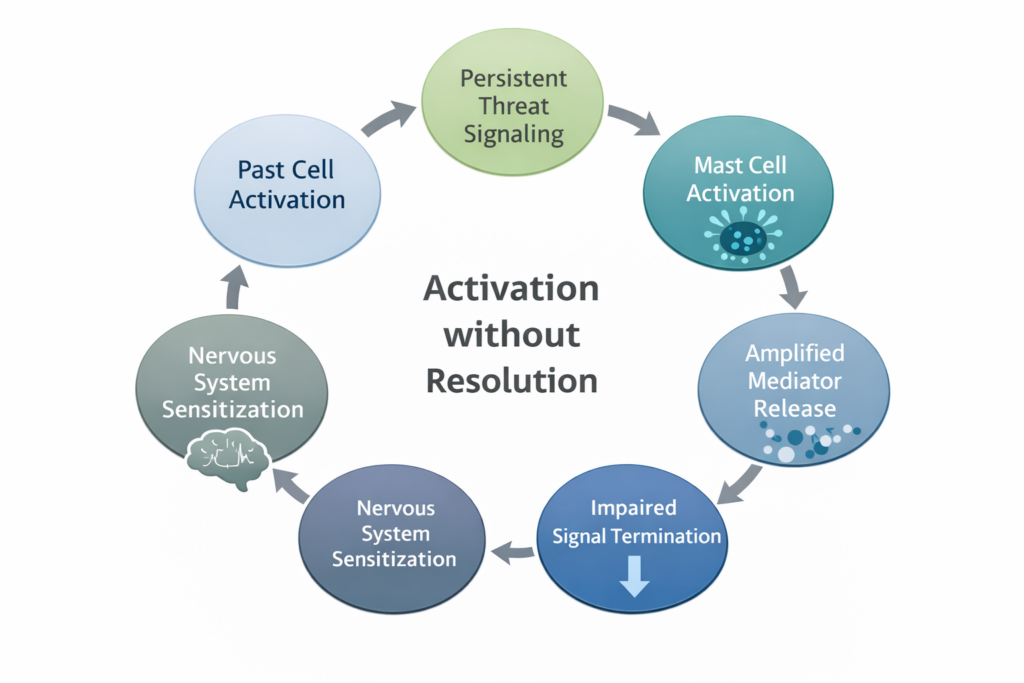
Mast Cell Activation Syndrome represents something different: a failure of signal termination.

This distinction matters.

Activation vs Dysregulation

Mast cells are designed to respond to threat and then return to baseline. In MCAS, activation becomes persistent, amplified, and poorly regulated—often independent of the original trigger.

This does not mean mast cells are broken. It means the system has lost its ability to resolve signaling.

⏩ How MCAS Differs From Histamine Intolerance

Histamine intolerance reflects a mismatch between load and degradation capacity

MCAS reflects ongoing activation even when load is reduced

In MCAS, mast cells respond not only to antigens, but to neuro-immune signaling, endothelial stress, and metabolic strain.

This explains why MCAS presentations are multi-systemic, unpredictable, and poorly explained by food lists alone.

The Risk of Over-Diagnosis

Labeling reactive patients as having MCAS prematurely can freeze clinical reasoning, discourage recovery expectations, and promote lifelong suppression strategies.

MCAS is real—but it is not common, and it should not be the default explanation for histamine reactivity.

A Systems-Based Clinical Perspective

In many cases, mast cell behavior improves when:

⏩ barrier integrity is restored

⏩ immune load decreases

⏩ nervous system tone stabilizes

⏩ metabolic capacity improves

When activation persists despite these corrections, MCAS deserves careful evaluation—not reflex labeling.

Ethical Framing Matters

Not all activation is pathology.

Not all persistence is permanent.

Clinical precision requires both caution and restraint.

Systems Reminder

Persistent activation reflects failure of resolution—not necessarily irreversible disease.

✴️ How I Work

I work from a systems physiology perspective, looking at how environmental signals, nutrition, stress, digestion, and recovery interact to shape adaptive capacity—rather than chasing isolated symptoms.

✴️ Work With Me

⏩ Clinical Consulting:

https://lnkd.in/gr_TAXzU

⏩ Formulation & Product Development:

HealthspanFormulations.com

Most conversations about health focus on nutrition, supplements, exercise, and stress.

But one of the most powerful—and most overlooked—inputs shaping human physiology is light.

Not light as brightness.

Not light as convenience.

But light as biological information.

Modern humans live in environments that are visually bright yet biologically incomplete. We spend most of our days under artificial lighting that looks adequate to the eye but lacks critical wavelengths present in natural sunlight—particularly near-infrared (NIR) and ultraviolet (UV) light.

This mismatch matters far more than most people realize.


Light as a Primary Regulatory Signal

Light interacts with human biology at multiple levels simultaneously:

  • Circadian timing (sleep–wake rhythms, hormone signaling)
  • Mitochondrial function (energy production and redox balance)
  • Neuroendocrine regulation (stress responsiveness and recovery)
  • Immune signaling (inflammatory tone and repair capacity)

The eye is not merely a visual organ—it is a regulatory interface that communicates environmental conditions directly to the brain and peripheral tissues.

When light signals are distorted, incomplete, or mistimed, downstream systems adapt accordingly.


The Problem with Modern Lighting

Most LED lighting is optimized for:

  • Energy efficiency
  • Visual brightness
  • Cost reduction

It is not optimized for human biology.

LEDs emit a narrow spectral range dominated by blue light, while lacking:

  • Near-infrared wavelengths that support mitochondrial signaling
  • The natural spectral balance found in sunlight and firelight

The result is an environment that can appear “bright” while being biologically disruptive—especially when exposure is prolonged and poorly timed.


Why This Matters at the Systems Level

When light signaling is chronically mismatched:

  • Circadian rhythms lose coherence
  • Stress signaling becomes exaggerated
  • Recovery and repair capacity decline
  • Metabolic flexibility narrows
  • Tolerance to other inputs (diet, exercise, supplements) decreases

In systems physiology, this is not viewed as a single problem—it is understood as background load that quietly shapes how all other systems respond.

No supplement can fully compensate for a mismatched environment.


A Note on Red Light, NIR, and Advanced Light Therapies

Targeted light exposures (including red and near-infrared wavelengths) are increasingly explored for their ability to influence cellular signaling and recovery pathways. These approaches are best understood not as treatments, but as contextual inputs that may support adaptive capacity when used appropriately and in the right sequence.

As with all physiological inputs, context, timing, and total load matter more than intensity.


How I Work

My work is grounded in systems physiology and signal integration.

Rather than isolating symptoms or chasing single mechanisms, I look at how multiple inputs—light, nutrition, stress, digestion, immune signaling, and recovery—interact to influence overall adaptive capacity.

This approach applies equally to:

  • Individuals navigating complex, persistent health challenges
  • Clinics and companies developing supplements or functional products intended to work with human physiology, not against it

The goal is coherence, not stimulation.


Final Thought

Before adding another intervention, it’s worth asking a simpler question:

Is the environment supporting the biology—or quietly working against it?

Light is not optional information.

It is foundational context.


Work With Me

Clinical Consulting

For individuals and practitioners seeking guidance grounded in systems homeostasis, adaptive capacity, and physiological regulation—not symptom chasing—my clinical services are available at:

👉 OptimumHealthConsulting.com

Formulation & Product Development

If you are a clinic, practitioner, or company developing nutritional supplements, botanicals, or functional products, I provide formulation strategy and development grounded in systems physiology and real-world clinical application:

👉 HealthspanFormulations.com


Hashtags

#SystemsPhysiology #CircadianBiology #MitochondrialHealth #EnvironmentalHealth

#FunctionalMedicine #IntegrativeHealth #Healthspan #HumanBiology

#RobLamberton #RobertLamberton