Category: Disease Conditions

Continuing on with our discussion on strategies to help to protect against viruses in general and the SARS-CoV-2 virus in particular, today I want to highlight zinc.

As I have in previous posts, I want to make it clear that any of these recommendations I share are not intended to suggest that you should not access medical care if you suspect you may have contracted or been exposed to the SARS-CoV-2 virus – or any other serious illness.

Numerous clinical trials have clearly demonstrated that zinc is effective against viruses – including the common cold.

Some MDs have started to incorporate the use of zinc in a protocol which also includes Hydroxychloroquine – an old generation malaria drug with Azithromycin – an antibiotic.

In this anecdotal report from Vladimir (Zev) Zelenko MD who is based in Monroe, NY in his protocol he prescribed 200 mg of zinc sulfate per day for five days for active SARS-CoV-2 virus infections.

Typical zinc supplements are typically approximately 15 – 30 mg per day – this would be for ongoing health maintenance but not necessarily active viral infections.

Recent feedback has shown that the SARS-CoV-2 virus can initially become very active in the nose and throat areas and a zinc spray has traditionally been used for helping to target viral infections in these areas. Zinc sprays are often combined with other ingredients such as echinacea and they are available at most health food stores.

One consideration with respect to zinc consumption is that you need to be careful because there is a balance in the body between zinc and copper.

Some zinc supplements also include added copper – typically approximately 2 mg per day.

Consult a knowledgeable health care practitioner for more precise information on recommended dosages.

Zinc is another compound that we have available to help to maintain our state of health and to help to prevent viral infections – but also it can be a valuable tool for active infections.

I want to share another in a series of simple tips you can follow to help to protect yourself from the SARS-CoV-2 virus or any viral or bacterial infection – such as the flu and colds.

However I want to make it clear that any of these recommendations are not intended to suggest that you should not access medical care if you suspect you may have contracted or been exposed to the SARS-CoV-2 virus.

Consumption of sodium bicarbonate – baking soda can help to alkalinize the pH of the body and microbes do not do well in alkaline environments.

It is important when consuming sodium bicarbonate that you use a baking soda without aluminum – this will typically be stated on the packaging.

Arm & Hammer is the most popular brand which is aluminum free.

It is also important to monitor your pH when you are doing this with pH paper strips for both the urine and saliva.

pH strips are available from most medical supply companies.


Dr. Sircus has a great article on this topic on his blog

His suggestion is to raise your urinary pH up to 8.0 being guided by testing with the pH strips and typically the infection will resolve within a few days.

Here is some of the information from his article:

The dosage varies with one’s pH readings of both urine and saliva and the condition being treated. Maximum dosage is right on the Arm & Hammer box, which is seven half-teaspoons a day for a full grown adult under age 60 and three half-teaspoons for people over age 60. One has to check their pH daily in the morning and after a bicarbonate bath, which can be made quite strong.

“The proven value of Arm & Hammer Bicarbonate of Soda as a therapeutic agent is further evinced by the following evidence of a prominent physician named Dr. Volney S. Cheney, in a letter to the Church & Dwight Company:

“In 1918 and 1919 while fighting the ‘Flu’ with the U. S. Public Health Service it was brought to my attention that rarely any one who had been thoroughly alkalinized with bicarbonate of soda contracted the disease, and those who did contract it, if alkalinized early, would invariably have mild attacks. I have since that time treated all cases of ‘Cold,’ Influenza and LaGripe by first giving generous doses of Bicarbonate of Soda, and in many, many instances within 36 hours the symptoms would have entirely abated. Further, within my own household, before Woman’s Clubs and Parent-Teachers’ Associations, I have advocated the use of Bicarbonate of Soda as a preventive for “Colds,” with the result that now many reports are coming in stating that those who took “Soda” were not affected, while nearly everyone around them had the “Flu.”

Recommended dosages from the Arm and Hammer Company for colds and influenza back in 1925 were:

  • During the first day take six doses of half teaspoonful of Arm & Hammer Bicarbonate of Soda in glass of cool water, at about two hour intervals.
  • During the second day take four doses of half teaspoonful of Arm and Hammer Bicarbonate of Soda in glass of cool water, at the same intervals.
  • During the third day take two doses of half teaspoonful of Arm and Hammer Bicarbonate of Soda in glass of cool water morning and evening, and thereafter half teaspoonful in gladss of cool water each morning until cold is cured.

I will share more simple techniques in the days ahead that you can use to help to protect yourself from infections – or to help to heal from infections if you contract them.

There are many simple steps that can be taken to help protect oneself from the SARS-CoV-2 virus.

One of these would be to take some supplemental melatonin.

Melatonin levels decrease as we age and low melatonin levels may be a contributing factor as to why older individuals have more serious health issues with the virus if they become infected.

Melatonin provides many health benefits however one of the key ones as it pertains to the virus is it helps to prevent the cytokine cascade which is typical in those who develop lung damage.

The cytokine cascade is an overreaction of the immune system which can cause significant inflammation and result in the development of acute respiratory distress syndrome (ARDS) .

Here is a link to a good article on this topic from the

Deep Roots at Home website

So taking some melatonin in the evening – approximately 3- 5 mg about an hour before bed will not only help with your sleep but help to protect you from the SARS-CoV-2 virus.

  • IF you are taking ACE inhibitors, have cardiac conditions, hypertension, you need to consult your physician before taking high doses of melatonin.  Melatonin may lower blood pressure and cause hypotension at higher dosages.  
  • IF you are diabetic, or have insulin resistance, DO NOT TAKE MELATONIN before 3 pm.  Melatonin is able to suppress insulin. 

Today I want to share with you an article from the Hormones Matter website written by  Chandler Marrs, PhD

The article focuses on the fact that many individuals are consuming Metformin considering it to be a magical anti-aging drug.

I am in agreement with Chandra in that personally I have have never been a fan.

There are several considerations for myself as to why I feel this way which she talks about in this article, such as deficiencies that can develop, negative effects on mitochondrial function and a potential negative impact on exercise performance.

I would suggest that berberine provides many of the same benefits as Metformin as well as some such as CV benefits that Metformin does not provide – and berberine does not have any of the same negative effects vs. Metformin.

Following is Chandler’s article

I have never been a fan of Metformin. It seemed too good to be true. Many years ago I had a conversation with a researcher about all of its possible therapeutic indications. His lab was actively pursuing the anti-cancer angle. That should have been a clue that Metformin might be causing more damage than we recognized, but it wasn’t. At that point, I was still enamored with the wonders of pharmacology and hadn’t yet begun my path toward understanding medication adverse reactions. Indeed, it wasn’t until very recently, when a family member began suffering from one of these reactions, that I began my investigation in full. This is what I learned.

Read More

Exposure to and accumulation of environmental toxins represents a major challenge to optimizing health in our current environment.

BPA – Bisphenol A is one of these environmental toxins which has received considerable coverage over the last several years.

The article I want to share with you today –from an article posted on the Science Daily website suggests that levels of accumulation in humans has been seriously underestimated.

This article was based upon a published study done at Washington State University and published in The Lancet Diabetes & Endocrinologythe citation is included at the end of this article.

Just before you read this information, here is an excerpt from an abstract on”Health Risk of Exposure to Bisphenol A” (abstract included at the end of this article) on some of the potential issues that exposure to BPA may cause:

” Due to its phenolic structure BPA has been shown to interact with estrogen receptors and to act as agonist or antagonist via estrogen receptor (ER) dependent signalling pathways. Therefore, BPA has been shown to play a role in the pathogenesis of several endocrine disorders including female and male infertility, precocious puberty, hormone dependent tumours such as breast and prostate cancer and several metabolic disorders including polycystic ovary syndrome (PCOS)”

Due to the prevalence of exposure to BPA in our environment – as well as other chemicals and heavy metals periodic monitoring and supervised detox programs to clear out this toxin load are serious considerations for optimizing health and potentially extending healthspan.

Summary:

  Researchers have developed a more accurate method of measuring bisphenol A (BPA) levels in humans and found that exposure to the endocrine-disrupting chemical is far higher than previously assumed. The study provides the first evidence that the measurements relied upon by regulatory agencies, including the US Food and Drug Administration, are flawed, underestimating exposure levels by as much as 44 times. Researchers have developed a more accurate method of measuring bisphenol A (BPA) levels in humans and found that exposure to the endocrine-disrupting chemical is far higher than previously assumed.

The study, published in the journal The Lancet Diabetes & Endocrinology on Dec. 5, provides the first evidence that the measurements relied upon by regulatory agencies, including the U.S. Food and Drug Administration, are flawed, underestimating exposure levels by as much as 44 times.

“This study raises serious concerns about whether we’ve been careful enough about the safety of this chemical,” said Patricia Hunt, Washington State University professor and corresponding author on the paper. “What it comes down to is that the conclusions federal agencies have come to about how to regulate BPA may have been based on inaccurate measurements.”

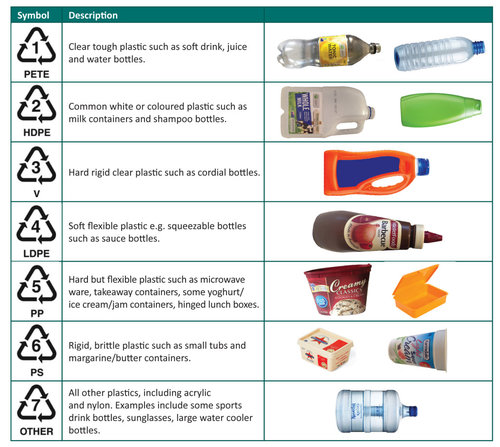
BPA can be found in a wide range of plastics, including food and drink containers, and animal studies have shown that it can interfere with the body’s hormones. In particular, fetal exposure to BPA has been linked to problems with growth, metabolism, behavior, fertility and even greater cancer risk.

Despite this experimental evidence, the FDA has evaluated data from studies measuring BPA in human urine and determined that human exposure to the chemical is at very low, and therefore, safe levels. This paper challenges that assumption and raises questions about other chemicals, including BPA replacements, that are also assessed using indirect methods.

Hunt’s colleague, Roy Gerona, assistant professor at University of California, San Francisco, developed a direct way of measuring BPA that more accurately accounts for BPA metabolites, the compounds that are created as the chemical passes through the human body.

Previously, most studies had to rely on an indirect process to measure BPA metabolites, using an enzyme solution made from a snail to transform the metabolites back into whole BPA, which could then be measured.

Gerona’s new method is able to directly measure the BPA metabolites themselves without using the enzyme solution.

In this study, a research team comprised of Gerona, Hunt and Fredrick vom Saal of University of Missouri compared the two methods, first with synthetic urine spiked with BPA and then with 39 human samples. They found much higher levels of BPA using the direct method, as much as 44 times the mean reported by the National Health and Nutrition Examination Survey (NHANES). The disparity between the two methods increased with more BPA exposure: the greater the exposure the more the previous method missed.

Gerona, the first author on the paper, said more replication is needed.

“I hope this study will bring attention to the methodology used to measure BPA, and that other experts and labs will take a closer look at and assess independently what is happening,” he said.

The research team is conducting further experiments into BPA measurement as well as other chemicals that may also have been measured in this manner, a category that includes environmental phenols such as parabens, benzophenone, triclosan found in some cosmetics and soaps, and phthalates found in many consumer products including toys, food packaging and personal care products.

“BPA is still being measured indirectly through NHANES, and it’s not the only endocrine-disrupting chemical being measured this way,” Gerona said. “Our hypothesis now is that if this is true for BPA, it could be true for all the other chemicals that are measured indirectly.”

This study was supported by grants from the National Institutes of Health.


Story Source:

Materials provided by Washington State University. Original written by Sara Zaske. Note: Content may be edited for style and length.


Journal Reference:

  1. Roy Gerona, Frederick S vom Saal, Patricia A Hunt. BPA: have flawed analytical techniques compromised risk assessments? The Lancet Diabetes & Endocrinology, 2019; DOI: 10.1016/S2213-8587(19)30381-X

Rocz Panstw Zakl Hig. 2015;66(1):5-11.

Health risk of exposure to Bisphenol A (BPA).

Konieczna A1, Rutkowska A1, Rachoń D1.  

Abstract

Bisphenol A (BPA) belongs to chemicals that are produced in large quantities worldwide. It is commonly used as monomer in polycarbonate synthesis, plasticizer in the production of epoxy resins, as well as an additive for the elimination of surfeit of hydrochloric acid during the polyvinyl chloride (PVC) production. BPA is not only used in the production of plastics intended to a direct contact with food, including plastic packaging and kitchenware, but also in inner coatings of cans and jar caps. There are various routes of human exposure to this substance such as oral, by inhalation and transdermal. The main sources of exposure to BPA include food packaging and dust, dental materials, healthcare equipment, thermal paper, toys and articles for children and infants. BPA is metabolized in the liver to form bisphenol A glucuronide and mostly in this form is excreted with urine. Due to its phenolic structure BPA has been shown to interact with estrogen receptors and to act as agonist or antagonist via estrogen receptor (ER) dependent signalling pathways. Therefore, BPA has been shown to play a role in the pathogenesis of several endocrine disorders including female and male infertility, precocious puberty, hormone dependent tumours such as breast and prostate cancer and several metabolic disorders including polycystic ovary syndrome (PCOS).

Because of the constant, daily exposure and its tendency to bio-accumulation, BPA seems to require special attention such as biomonitoring. This observation should include clinical tests of BPA concentration in the urine, which is not only one of the best methods of evaluation of the exposure to this compound, but also the dependence of the daily intake of BPA and the risk of some endocrine disorders. PMID: 25813067

From the Science Alert website:

People who live with depression have low blood levels of a specific molecule, new medical research has revealed. It’s called acetyl-L-carnitine, and those with particularly severe, treatment-resistant or childhood onset depression were found to have the lowest levels.

Naturally produced by the body, acetyl-L-carnitine plays a crucial role in metabolising fat and the production of energy. It’s also widely available as a dietary supplement – not some strange and esoteric thing.

Now researchers from multiple institutions have found a link to depression, noticing a clear correlation between the condition and noticeably low levels of acetyl-L-carnitine.

In recent years, more and more evidence has been building to suggest this link. Since at least 1991, medical researchers have been aware of acetyl-L-carnitine’s potential to treat depression, particularly in geriatric and comorbid patients, with the substance showing greater efficacy than a placebo.

More recently, Carla Nasca of the Rockefeller University led a study on rodents, which found that acetyl-L-carnitine had a fast-acting antidepressant effect on rats, kicking into effect in just a few days, rather than the weeks it takes for drugs like SSRIs.

Now Nasca and colleagues have conducted a study on human patients to see if there’s a basis for a similar trial in people.

“As a clinical psychiatrist, I have treated many people with this disorder in my practice,” said Stanford University School of Medicine psychiatrist Natalie Rasgon.

“It’s the number one reason for absenteeism at work, and one of the leading causes of suicide. Worse, current pharmacological treatments are effective for only about 50 percent of the people for whom they’re prescribed. And they have numerous side effects, often decreasing long term compliance.”

The research team recruited 71 patients with a diagnosis of depression. These were men and women, aged between 20 and 70. They also recruited 45 demographically matched healthy controls.

The patients had to fill out a detailed questionnaire, undergo a clinical assessment and medical history, and give a blood sample. Of the patients with depression, 28 had moderate depression and 43 had severe depression at the time of the study.

When compared to the age- and sex-matched healthy controls, the patients with depression had substantially lower levels of acetyl-L-carnitine.

Those with the most severe depression had the lowest levels. This included patients whose depression had resisted antidepressant drugs, those with early onset, and those who had experienced childhood abuse, neglect, poverty or violence.

These patients constitute around 25-30 percent of all people suffering depression, and are the most in need of help, the researchers said.

But there are a few steps to be done before acetyl-L-carnitine supplements can be approved as a treatment. In particular, clinical trials on human patients with depression, since, as we know, results from rodent models can’t always be replicated in humans.

The researchers also don’t know the reason for the correlation, or the effect it has. The rat research suggests that acetyl-L-carnitine plays a role in the brain, preventing the excessive firing of excitatory neurons, but this will need to be explored further as well.

“We’ve identified an important new biomarker of major depression disorder,” Rasgon said.

“We didn’t test whether supplementing with that substance could actually improve patients’ symptoms. What’s the appropriate dose, frequency, duration? We need to answer many questions before proceeding with recommendations, yet. This is the first step toward developing that knowledge, which will require large-scale, carefully controlled clinical trials.”

And we’ll be eagerly awaiting the results of those trials.

Meanwhile, the team’s research can be found in the journal PNAS.