Gallbladder Problems? Just Get It Removed! = Big Problems!
The Gallbladder: Function, Biliary Stasis, Gallstones, and Post-Removal Support
By Rob Lamberton, BSc, FNTP, FDN-P (Candidate)
Introduction
The gallbladder is a small, overlooked organ with major influence over digestion, nutrient absorption, detoxification, and metabolic health. Gallbladder disease—including biliary stasis, sludge, and gallstones—is increasingly common, and gallbladder removal (cholecystectomy) is now one of the most frequently performed abdominal surgeries in the United States.
This article provides a clear explanation of gallbladder function, the causes of biliary stasis and gallstones, the consequences of living without a gallbladder, and evidence-supported nutritional strategies for maintaining healthy bile flow.
What the Gallbladder Does
The gallbladder stores and concentrates bile—an essential digestive fluid produced by the liver. When dietary fat enters the small intestine, the hormone CCK triggers the gallbladder to contract and release bile through the common bile duct.
Bile enables:
- digestion and emulsification of dietary fats
- absorption of vitamins A, D, E, K
- elimination of bilirubin, cholesterol, and toxins
- microbial balance in the small intestine
- support for liver detoxification
Without effective bile storage and release, multiple digestive and metabolic issues can develop.
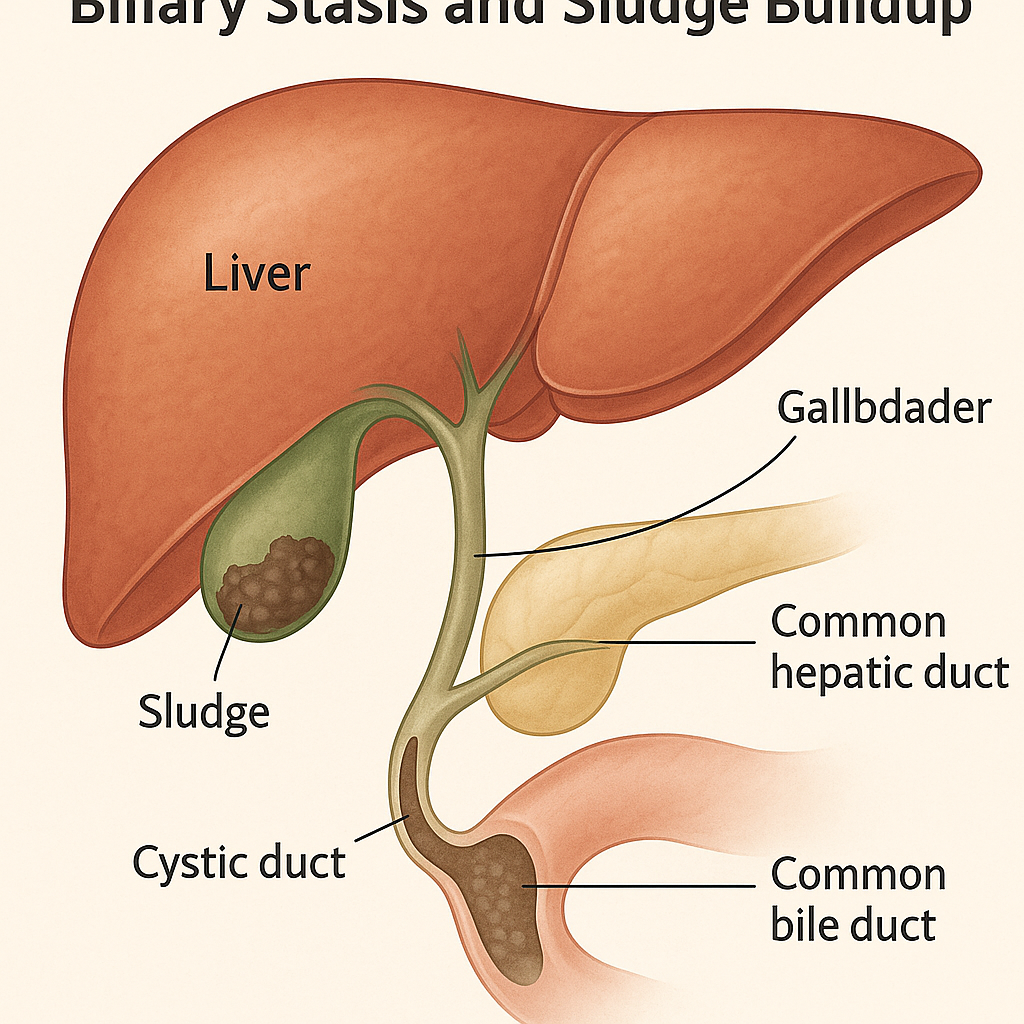
What Causes Biliary Stasis and Sludge
Biliary stasis is the slowing or stagnation of bile. When bile becomes thick or overly concentrated, the risk of sludge and gallstones increases.
Common causes include:
- low-fat diets or long fasting periods
- obesity and metabolic dysfunction
- rapid weight loss
- sedentary lifestyle
- dysbiosis and poor gut motility
- high-estrogen states (pregnancy, birth control pills, hormone therapy)
- inadequate hydration
- low bile acid production
Stagnant bile can crystallize and form cholesterol gallstones—the most common type seen clinically.
How Many Gallbladder Surgeries Occur in the U.S.?
Cholecystectomy is one of the most common abdominal surgeries performed.
- Approximately 700,000 gallbladders are removed annually in the United States,
- And some healthcare estimates place the total closer to 1.2 million per year when including all surgical settings.
Given these numbers, gallbladder-related education is essential for long-term digestive and metabolic health.
Health Issues After Gallbladder Removal
Although removal of the gallbladder resolves acute biliary pain, it does not “fix” the underlying issues that led to bile dysfunction.
Without a gallbladder:
1. Bile trickles continuously
Instead of releasing bile when fat is eaten, bile drips steadily into the intestine, leading to:
- poor fat digestion
- bloating, gas, cramping
- loose stools or urgency
- floating or fatty stools
- malabsorption of fat-soluble vitamins
2. Fat-soluble vitamin deficiencies may develop
Absorption of vitamins A, D, E, K is often compromised.
3. Bile acid diarrhea is more common
Continuous bile leakage into the intestine can irritate the gut lining.
4. Post-cholecystectomy syndrome
Up to 40% of people continue experiencing digestive symptoms even after removal.
Natural Compounds and Dietary Measures for Gallbladder Health
Dietary Strategies
- Moderate intake of healthy fats (prevents bile stagnation)
- Adequate fiber for cholesterol metabolism
- Hydration to maintain bile fluidity
- Bitter foods (dandelion greens, arugula, ginger, lemon)
- Stable weight management—avoid very low-fat diets or rapid weight loss
Natural Compounds
- Milk thistle: supports liver and bile production
- Curcumin: promotes bile flow
- Taurine: supports bile acid conjugation
- Phosphatidylcholine: essential for healthy bile composition
- Magnesium: supports gallbladder contraction
Why Ox Bile Matters After Gallbladder Removal
Ox bile or bile salt supplementation is one of the most important supports for individuals without a gallbladder.
Supplemental bile salts can:
- assist fat digestion
- support absorption of fat-soluble vitamins
- improve stool consistency
- reduce bloating and discomfort after fatty meals
- support gut motility through bile acid signaling
Ox bile should be taken with meals containing fat.
Conclusion
The gallbladder is crucial for proper digestion, detoxification, and metabolic balance. When it is impaired—or removed—strategic nutritional and supplemental support becomes essential. Addressing bile health improves digestion, micronutrient absorption, gut function, and overall metabolic resilience.
Work With Rob (Website CTA)
If your company or clinic is developing nutritional supplements or functional drinks, I provide consulting and formulation services to help create science-driven, evidence-based products that truly make an impact.
👉 Learn more: https://healthspanformulations.com
#GallbladderHealth #BiliaryStasis #Cholecystectomy #DigestiveHealth #MetabolicSupport #OxBile #FunctionalMedicine #NutraceuticalScience #DigestiveSupport #MetabolicChaos #LiverDetox #FatDigestion #CholesterolHealth #IntegrativeMedicine #NutritionalSupport #VitaminAbsorption #RobLamberton #RobertLamberton