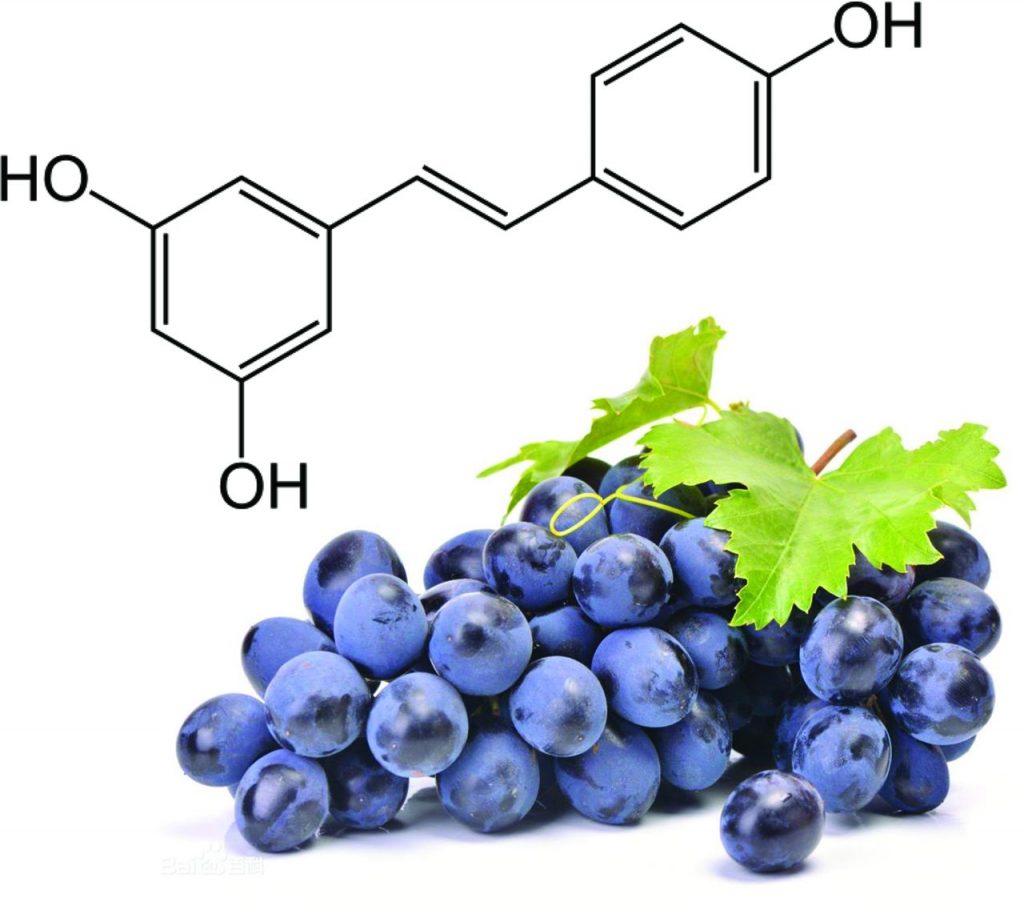
Today I want to share with you a paper I recently came across which documents the benefits of Resveratol supplementation.
Resveratrol is a key ingredient in our Integra Nutrition Longevity Sciences GenZogenol-R formulation which was designed to target the aging process at the DNA level.
You can find out more about the GenZogenol-R formulation on the Integra Nutrition website – or contact me directly:
Phone: 778-227-4952
Email: Rob@RobLamberton.com
In addition to Resveratrol we have included in the GeZogenol formulation Pterostilbene which is often described as a “Methylated Resveratrol”.
Resveratrol and Pterostilbene work synergistically when taken together however there are some significant differences between them:
“Pterostilbene is described as a methylated resveratrol which has a much longer half life vs. resveratrol: 14 minutes for resveratrol vs. 105 minutes for pterostilbene, pterostilbene is also more bioavailable – 80% vs. resveratrol – 20%. better metabolic activity vs. resveratrol, it is also a (PPARа) agonist.”
This paper describes how Resveratrol “Prolongs Lifespan And Delays Onset Of Aging-related Traits”.
Following is an article from Science Daily on this paper as well as a link to the paper.
From the paper:
“Resveratrol appears to be the first molecule to consistently cause life extension across very different animal groups such as worms, insects, and fish, and it could become the starting molecule for the design drugs for the prevention of human aging-related diseases”.
Regards,
Rob
Natural Compound Prolongs Lifespan And Delays Onset Of Aging-related Traits In A Short-lived Vertebrate
Summary: By studying a particularly short-lived fish species, researchers have been able to show that a natural compound previously shown to extend lifespan in non-vertebrate organisms can also do so in at least one vertebrate species. The findings, reported by Alessandro Cellerino of the Scuola Normale Superiore, Pisa, and colleagues, support the potential utility of the compound in human aging research.
FULL STORY
By
studying a particularly short-lived fish species, researchers have been
able to show that a natural compound previously shown to extend
lifespan in non-vertebrate organisms can also do so in at least one
vertebrate species. The findings, reported by Alessandro Cellerino of
the Scuola Normale Superiore, Pisa, and colleagues, support the
potential utility of the compound in human aging research.
The
development of drugs able to retard the onset of aging-related diseases
and improve quality of life in the elderly is a growing focus of aging
research and public health in modern society. But the successful
development of drugs aimed at aging-related diseases needs to face the
challenge posed by the lifespan of the available animal
models–mammalian models for aging are relatively long-lived and aren’t
as easily studied as shorter-lived species.
Resveratrol
is an organic compound naturally present in grapes–and particularly
enriched in red wine–and was previously shown to prolong lifespan in
non-vertebrate model organisms such as yeast, the worm C. elegans, and
the fruit fly Drosophila. However, until now, life-long pharmacological
trials were performed in the worm or fly model organisms because of
their very small size, very short natural lifespan, and affordable
cultivation costs. Laboratory mice, on the other hand, live more than
two years and are relatively expensive to maintain, making large-scale,
life-long pharmacological trials in mice unaffordable.
Recently,
a small fish species with a captive lifespan of only three months was
described by Cellerino and colleagues. In the new work, the researchers
used this short-lived fish to test the effects of resveratrol on
aging-related physiological decay. The researchers added resveratrol to
daily fish food and found that this treatment increased longevity and
also retarded the onset of aging-related decays in memory and muscular
performance.
Resveratrol
appears to be the first molecule to consistently cause life extension
across very different animal groups such as worms, insects, and fish,
and it could become the starting molecule for the design drugs for the
prevention of human aging-related diseases.
The
researchers include Dario R. Valenzano of Scuola Normale Superiore in
Pisa, Italy; Alessandro Cellerino of Scuola Normale Superiore and
Istituto di Neuroscienze del CNR in Pisa Italy; Eva Terzibasi and Tyrone
Genade of Istituto di Neuroscienze del CNR in Pisa Italy; Antonino
Cattaneo of European Brain Research Institute and Lay Line Genomics
S.p.A. in Rome, Italy; Luciano Domenici of Istituto di Neuroscienze del
CNR in Pisa, Italy and Universita dell’Aquila in L’Aquila, Italy. This
work was financed by Lay Line Genomics S.p.A., which holds the rights
for commercial exploitation of the model.
Valenzano
et al.: “Resveratrol Prolongs Lifespan and Retards the Onset of
Age-Related Markers in a Short-Lived Vertebrate.” Publishing in Current
Biology 16, 296-300, February 7, 2006. DOI 10.1016/j.cub.2005.12.038. www.current-biology.com
Story Source:
Materials provided by Cell Press. Note: Content may be edited for style and length.