Category: Uncategorized

Ingredient Intelligence™ — Signal Modulators Series
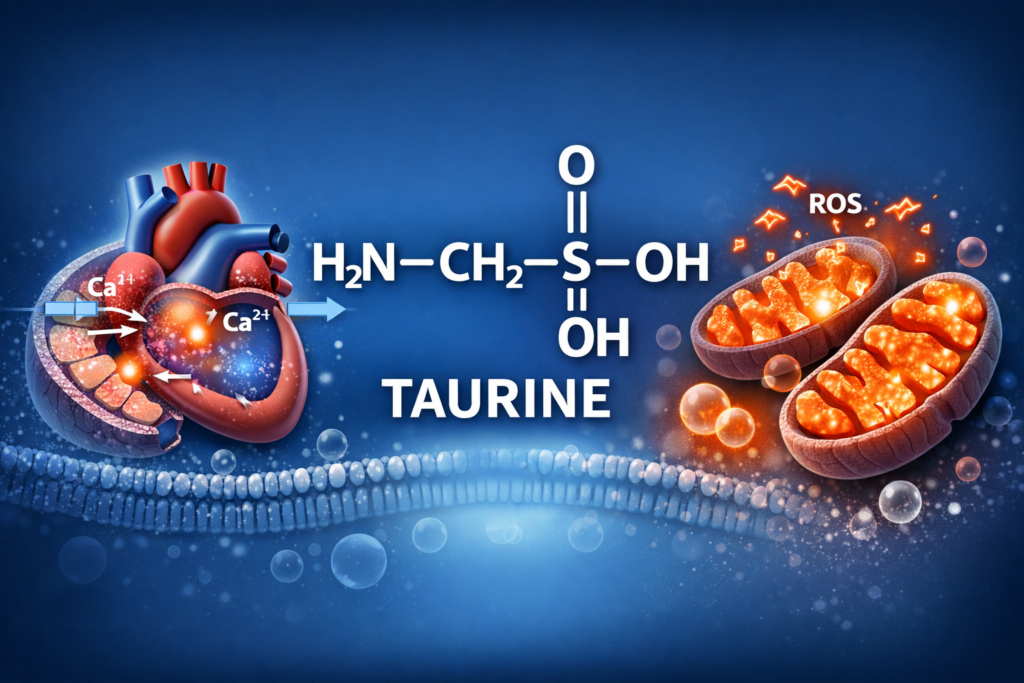
Why Taurine Matters (Systems View)

Taurine is often mislabeled as a stimulant ingredient because of its association with energy drinks. In reality, taurine functions as the opposite of stimulation.

Taurine is best understood as a cellular stabilizer — a compound that:

  • buffers excessive signalling,
  • protects membranes and mitochondria,
  • and improves tolerance to metabolic and inflammatory stress.

From a Systems Homeostasis perspective, taurine does not “push” physiology forward.

It prevents systems from being pushed too far.


Core Biological Roles (Non-Exhaustive)

1. 

Calcium Signalling Regulation

Taurine modulates intracellular calcium handling, particularly in:

  • cardiomyocytes,
  • neurons,
  • skeletal muscle.

This has downstream effects on:

  • contractility,
  • excitability,
  • arrhythmia risk,
  • and neuromuscular stability.

Systems implication:

Taurine reduces signal overshoot — not signal initiation.


2. 

Osmoregulation & Membrane Integrity

Taurine acts as a compatible osmolyte, helping cells:

  • maintain volume,
  • preserve membrane fluidity,
  • tolerate inflammatory or oxidative environments.

This is especially relevant under:

  • chronic stress,
  • hyperglycaemia,
  • ischemia,
  • infection-related inflammation.

3. 

Mitochondrial Protection

Taurine supports mitochondrial function by:

  • reducing oxidative stress,
  • stabilizing electron transport chain activity,
  • protecting mitochondrial membranes.

Key point:

This improves resilience, not maximal ATP output.


4. 

Bile Acid Conjugation & Metabolic Signalling

Taurine conjugates bile acids, influencing:

  • fat digestion,
  • gut–liver signalling,
  • metabolic regulation.

In compromised systems, this improves signal clarity, not digestive force.


Taurine in Metabolic Dysregulation

Research consistently shows taurine is associated with:

  • improved insulin sensitivity,
  • reduced inflammation,
  • improved lipid handling,
  • improved cardiovascular resilience.

But the mechanism is not “metabolic acceleration.”

It is signal dampening + cellular protection.

This is why taurine:

  • performs well in metabolic syndrome,
  • supports cardiovascular health,
  • improves tolerance to stress states.

Taurine & the Nervous System

Taurine interacts with:

  • GABAergic signalling,
  • glycine receptors,
  • inhibitory tone modulation.

Clinical implication:

Taurine supports neural braking systems, particularly in individuals with:

  • sympathetic dominance,
  • cortisol dominance,
  • anxiety with metabolic stress,
  • sleep disruption driven by hyperarousal.

This makes taurine a stabilizer, not a sedative.


Placement in the Ingredient Intelligence™ System

Functional Role:

Signal Stabilization & Cellular Protection

Primary Systems Influenced:

  • Cardiovascular
  • Neurological
  • Metabolic
  • Hepatic–digestive interface

What Taurine Is NOT

  • Not a stimulant
  • Not a performance enhancer
  • Not a shortcut to energy

What Taurine Supports

  • Tolerance
  • Resilience
  • Signal proportionality
  • Recovery capacity

Clinical Framing (Important)

Taurine is best conceptualized as a capacity-supporting compound.

It is most appropriate when:

  • signalling is excessive,
  • systems are reactive,
  • metabolic stress is present,
  • resilience is reduced.

It is not a substitute for:

  • sleep restoration,
  • stress load reduction,
  • nutritional rhythm,
  • digestive access.

Ingredient Intelligence™ Takeaway

Taurine does not make systems work harder.

It helps systems stop overreacting.

In an era where overstimulation drives pathology, taurine’s value lies in restoring proportional response, not pushing output.

Work With Me

Formulation & Product Development

HealthspanFormulations.com

Clinical Consulting

OptimumHealthConsulting.com

#IngredientIntelligence #SignalModulators #Taurine #SystemsHomeostasis #MetabolicHealth #CardiovascularHealth #RobLamberton #RobertLamberton

❇️ Ingredient Intelligence™

A systems-first series examining nutrients and compounds as signals, not isolated fixes — always through the lens of context, capacity, and adaptive reserve.

Introduction

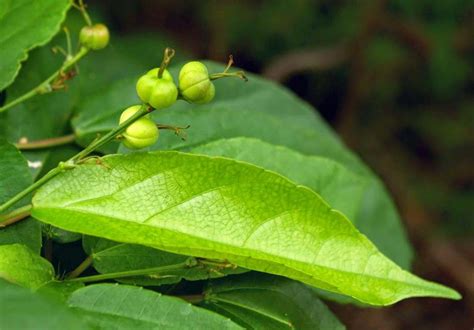
Deep in the Amazon rainforest, there’s a plant known as Iporuru (Alchornea castaneifolia) whose bark, leaves, and roots have been woven into the traditions and medicines of indigenous communities for generations. Today, as integrative health practitioners and curious health consumers seek botanicals backed by both tradition and science, Iporuru offers an intriguing case study: strong ethnobotanical use, some early lab evidence, and many open questions.

In this article, I’ll walk through its traditional roles, the early scientific underpinnings, safety cautions, and how clinicians might consider using it (with prudence).


Traditional & Ethnomedical Uses

  • Among indigenous peoples of Peru and the Amazon, Iporuru has long been used for rheumatism, arthritis, muscle pain, joint stiffness, coughs, colds, diarrhea, fertility, and as an aphrodisiac / tonic. RxList+3Rain-Tree+3Rain-Tree+3
  • The Shipibo and Candochi-Shapra tribes have used bark and roots for rheumatism. The Tikuna tribe reportedly uses bark decoctions before meals to reduce diarrhea. Rain-Tree+2Rain-Tree+2
  • In local herbal marketplaces in Peru, Iporuru is sold as remedies for arthritis and musculoskeletal complaints. Rain-Tree

Phytochemistry & Biological Actions

  • Preliminary chemical screening reveals Iporuru contains alkaloids (e.g. alchorneine), steroids, flavonoids, tannins, saponins, phenolics, xanthones, among others. Rain-Tree+1
  • Anti-inflammatory action is the most prominent mechanistic hypothesis: ethanol extracts of stembark in animal / in vitro models reduce swelling, inhibit prostaglandin synthesis, and modulate inflammation — consistent with its traditional use for joints and pain. Tropical Plants
  • Some sources also cite antifungal, antiviral and antitumor potential, though these remain speculative and insufficiently validated in human studies. Rain-Tree

Known & Unknown: Safety, Evidence Gaps & Cautions

  • There is a paucity of human clinical trials or controlled studies. Available data are largely from ethnomedicine or preclinical models.
  • Traditional sources note mild hypotensive (blood-pressure–lowering) effects, which suggests cautious use in those prone to hypotension or on antihypertensives. Rain-Tree
  • Unknowns include: interactions with drugs, effects in pregnancy or lactation, hepatotoxicity or nephrotoxicity, standardization of preparations, and consistent dosing parameters.
  • As always with less-studied botanicals: start with conservative dosing, monitor carefully, and communicate transparently with patients about uncertainties.

How Practitioners Might Responsibly Integrate It

Below is a suggested framework (in a clinical / integrative setting):

  1. Select appropriate patients — those already interested in botanical / complementary therapies, with mild-to-moderate joint discomfort not uncontrolled by standard therapies.
  2. Start small — use low-potency leaf decoctions or mild tinctures, rather than high-concentration isolates.
  3. Adjunctive role only — do not displace evidence-based standard of care (NSAIDs, physical therapy, etc.).
  4. Monitoring — track patient-reported outcomes (pain, mobility, quality of life), plus lab metrics (liver, kidney, BP) over time.
  5. Use in a learning / data collection mindset — consider sharing anonymized outcomes, adverse events, or case series to help build the evidence base.
  6. Patient education & transparency — make it clear that Iporuru is a botanical under investigation, not an approved pharmaceutical.

Final Thoughts

Iporuru stands at the crossroads of rainforest tradition and modern integrative interest. Its history as a joint / musculoskeletal tonic and anecdotal profile are compelling; its early laboratory signals intriguing. But the path ahead is long: we need human trials, standardization, safety profiling, and real-world clinical experience.

I have used Iporuru personally and in formulations and I have found it to be very effective for pain and inflammation.

As integrative clinicians, we have both opportunity and responsibility: to explore promising botanicals with curiosity and rigor, to communicate uncertainty, and to ensure patient safety. Iporuru might be a botanical to watch — but it’s not yet a frontline therapy.

If you’re a nutraceutical brand, healthcare company, or practitioner developing products in these areas, I help design and optimize formulations backed by science, efficacy, and market differentiation.

Let’s collaborate to bring advanced, evidence-informed products to life. 

#health #healthcare #herbs #medicinalherbs #functionalmedicine #naturopathicmedicine #integrativemedicine #nutraceuticals #healthspan #lifespan #naturalmedicine #herbalmedicine #nutrition #naturalhealth

What Is The Perfect Diet?

Most healthcare practitioners understand that a key component of the healing journey for patients to help them to resolve health issues is to help them improve their diet.

Most practitioners would agree to this concept in principle however there are two challenges regarding implementation:

The first is that most practitioners are busy and don’t really have the time to spend on this topic with patients other than perhaps giving them some handouts or sending them to a website.

(The possible exception being large multi-disciplinary clinics that might have RDs and/or nutritionists on staff that can work with patients.

The second is that the practitioner might not have specialized training in this area and it can be confusing!

A diet that seems to work well for one patient might be disastrous for another patient that has a similar health profile.

Biochemical Individuality

The optimal diet for any patient is a diet that is unique to their biochemical individuality.

This concept of biochemical individuality Is based upon research by individuals such as: Roger Williams, Linus Pauling, Weston A. Price, Bruce Ames.

More recently, William Walcott in 2001 published a book entitled: “The Metabolic Typing Diet” which is still widely available.

In conjunction with the release of this book, his company Health Excel made available an online assessment system which will determine an individual’s biochemical individuality based upon their metabolic type.

This assessment determines whether an individual is sympathetic or parasympathetic dominant or at a cellular level a fast oxidizer or a slow oxidizer.

A comprehensive report is generated that will guide the patient through aspects of an optimal diet for their biochemical individuality.

This is the dietary protocol that I use with my patients in my clinical practice and I find it to produce excellent results.

I will of course use some short term specialty diets If appropriate such as low histamine, keto, etc.

Here is the link where individuals can purchase the Metabolic Typing diet assessment and get their Metabolic Typing report.

If you have found developing dietary recommendations for your patients challenging, the Metabolic Typing system may provide an optimal solution for you and your patients.

Food Sensitivity Testing

One additional key component of dietary recommendations for patients is determining food sensitivities.

The most popular test available in the market is IgG (Immunoglobulin G) which is a blood test which measures levels of IgG antibodies produced by the immune system in response to different types of food.

The MRT Food Sensitivity Test

In my practice, I use the patented MRT food sensitivity test from Oxford Biomedical Technologies in Florida which I believe is significantly superior to IfG testing.

The test measures volumetric changes in white blood cells, as these shrink in response to the release of inflammatory mediators, including cytokines, histamine, leukotrienes, and prostaglandins.

The more the cells shrink, the stronger the mediator release—implying a more significant food sensitivity reaction.

Results are typically shown as color-coded bar graphs, denoting highly reactive, moderately reactive, and non-reactive foods.

Clinical Relevance and Use

What sets MRT apart is that it captures not just antibody-mediated reactions (type III and IV hypersensitivities) but other immune pathways that lead to inflammation and symptoms

This makes MRT especially relevant for conditions associated with chronic, delayed, or dose-dependent reactions, such as IBS, migraines, fibromyalgia, dermatitis, and other inflammatory conditions.

These are the tools that I use in my clinical practice to help my patients in this critical area of dietary recommendations – perhaps they may be of benefit to you also.

A recent diet “fad”? – craze has been the increasing popularity of the Carnivore Diet.
I think the reaction of most practitioners like myself who work with patients and provide them with guidance on personalized diets is that the Carnivore Diet is probably extreme and potentially unhealthy. I think most individuals think of plant materials as inherently healthy: vegetables and some fruit content are considered to be part of a healthy diet. The fact does remain however that plants incorporate into their make up anti-nutrients which are designed to help prevent animals from eating them. Giving the GI tract a temporary break from exposure to antinutrients can be very beneficial to some individuals who are dealing with GI inflammation, leaky gut and related conditions.
And this seems to be one of the potential benefits of the Carnivore Diet, and it may in fact prove to be a temporary dietary intervention worth considering for individuals dealing with some of the mentioned GI issues.
This is probably also the case with the Ketogenic Diet: there is still some question as to whether long term adoption of the Low Carb / High Fat diet is beneficial: I think what is key with this type of diet is transitioning into keto adaptation so that one’s metabolism is metabolically flexible so it can easily transition between utilizing the sugar as well as the fat – ketone energy burning pathways.
One of the best sources for patient education about the Low Carb / High Fat (Ketogenic) Diet is the website: DietDoctor.com.
Following is a well balanced – and referenced article on the Carnivore Diet from DietDoctor.com.
One of the key issues regarding the Carnivore Diet at this point in time is the fact that there is very little published research on the topic.
Key considerations / takeaways from my perspective include the following:
– organ meats should be included in any diet as part of a healthy diet- deficiencies such as folate and other micronutrients may result from the long term adoption of the Carnivore Diet- there is some question as to what changes might occur in the microbiome by adopting this type of diet- not all people achieve complete success on a low-carb, high-fat ketogenic diet that is rich in vegetables- anecdotal evidence suggests that the Carnivore Diet may be beneficial in reversing or improving challenging health issues such as Rheumatoid Arthritis, depression, migraines and others- “there is no clear scientific proof” that we need to eat vegetables at all- Dr. Steve Phinney is concerned about potential electrolyte deficiencies in sodium, magnesium and potassium in the carnivore diet


Sinking our teeth into the carnivore diet:what’s known, what’s not


1. Why explore carnivore eating?

2. What to eat

3. Potential benefits

4. Experts weigh in

5. Testimonials and advocates

6. Ancient past

7. Paleomedicina in Hungary

8. Intestinal permeability

9. Colon cancer?

10. My one-month trial
Read More:

https://www.dropbox.com/s/po1ggolimjjq8ej/What%27s%20With%20the%20Carnivore%20Diet.docx?dl=0