Category: Toxins

Well here we are in Canada over one year now since marijuana was legalized.

The potential medical benefits of marijuana consumption are significant however due to the historic U.S. government attitude towards drugs published research has not been very extensive.

Here are a couple of good resources which I use when discussing the potential medical benefits of marijuana:

Project CBD is an excellent research oriented resource on the science and application of CBD:

ProjectCBD

Here is a link to their Science page

NORML– National Organization for the Reform of Marijuana Legislation

This is a U.S. based lobbying organization which has for over 40 years been working to change legislation relating to marijuana – both for recreational use as well as medical use.

There is one particular pageon this website which does a good job of outlining the potential medical applications of marijuana – copied below.

I am not consuming any marijuana compounds currently however I have personally used marijuana products at certain times  over the past 15 years to help to manage a chronic pain condition.

I don’t currently need it as I am able to manage this condition with my own developed pain/inflammation formulation.

When I was using it in recent years, I would use a CBD tincture which worked quite well without any psychoactive effects from THC.

Before CBD fractions became available, I tried using a THC/CBD tincture formulation for my pain condition.  I was hoping that by being able to titrate the dosage that I could manage the psychoactive effects while achieving the pain/inflammation benefits but I had to abandon this strategy as I found the psychoactive effects too profound when I was working (something about trying to work on complex spreadsheets while feeling “buzzed” did not work!)

Today I want to share with you an article and a new study that suggests that chronic smoking of marijuana over a protracted period of time can increase the potential of developing testicular cancer in men by some 36%.

Read More

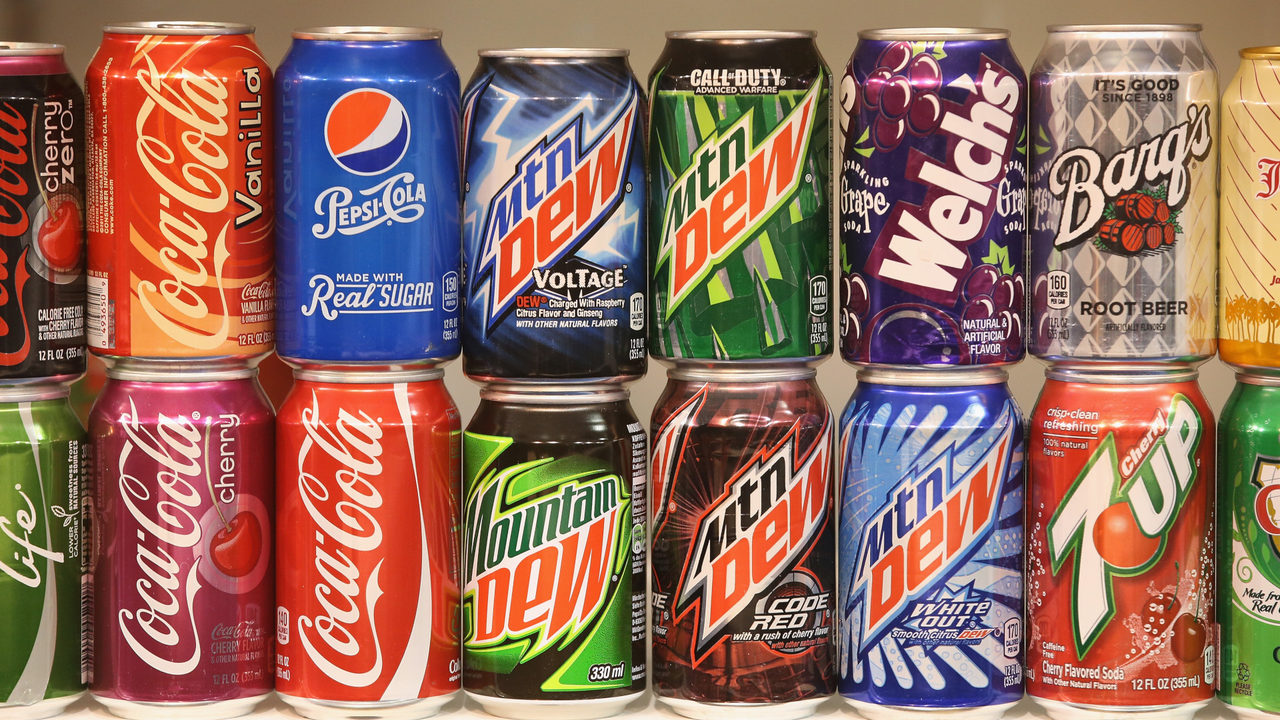
People who regularly consume soft drinks have a higher risk of an early death, researchers have found, with the trend seen for both sugared and artificially sweetened drinks.

While experts say the study cannot prove soft drinks are a driver of an increased risk of death, they say the work – which is the largest study of its kind – supports recent public health efforts to reduce consumption of soft drinks, such as the UK’s sugar tax.

“Our results for sugar-sweetened soft drinks provide further support to limit consumption and to replace them with other healthier beverages, preferably water,” said Dr Neil Murphy, a co-author of the research from the International Agency for Research on Cancer, part of the World Health Organization.

Read More

More alarming news about glyphosate, a key component in Monsanto’s herbicide Roundup: its effects may harm several future generations beyond the individual exposed to it

“A new study published today finds a variety of adverse health impacts in second and third generation offspring of rats exposed to glyphosate. It is the first of its kind to look at transgenerational effects and shows how descendants of exposed offspring were more likely to develop prostate, kidney and ovarian diseases, obesity and birth abnormalities [1].

The study suggests that risk assessments need to take into consideration the ability of chemicals to impact future generations through transgenerational effects, instead of only looking at the health impacts of direct exposure [2]”.

“This study provides alarming new evidence supporting our public health call to take glyphosate off the European market,” says Génon Jensen from the Health and Environment Alliance (HEAL). “If a pesticide is showing harm which only occurs generations down the line, surely this is an opportunity for the European Commission to take more precautionary measures to protect our health.”

We live in a toxic world and avoiding chemicals sprayed on fruits and vegetables makes good health sense.

Some fruits and vegetables are more problematic vs. others in terms of chemical content: a good resource for this information is the Environmental Working Group:

This is the organization which annually publishes the “Dirty Dozen” list: a list of the twelve most heavily sprayed fruits and vegetables.

Not only this but the EWG also lists the fruits and vegetables that are the least likely to cause issues with respect to chemical exposure.

Eating organic always makes sense however it can get expensive and these lists can serve as good guidelines to be able to choose which fruits and vegetables to buy organic – and those for which conventional may be okay, or at least less problematic.

A Simple Cleaning Solution for Fruits and Vegetables

Trying to remove chemicals from the surfaces of fruits and vegetables makes sense to minimize exposure: there are now compounds sold in stores which can be used for this, however here is a simple recipe you can make at home for this purpose.

  1. Combine the ingredients below in a large bowl. The concoction will bubble and fizz a lot after mixing so the bowl needs to be big.
  • 1 cup of water
  • 1 cup of white vinegar or cider vinegar
  • 1 tablespoon of baking soda
  • 2 teaspoons of lemon juice

If you have access to it, 1 tablespoon of food grade hydrogen peroxide can also be added to the mix.

Make sure to follow usage instructions and avoid skin contact.

2. Stir the mixture and then transfer to a spray bottle

3. Spray on fruits and vegetables

4. Allow the mixture to sit for about 5 minutes

5. Rinse off with water

6. Give items a final visual inspection

Enjoy your produce with less health damaging chemicals!


Today I want to share with you an excellent in depth article from the blog of Dr. Gabriel Cousins, MD. which discusses the disastrous advent of 5G wireless technology.

This technology is predicted to create significant health issues for humanity: from the article below, here are some of the suggested consequences.

Effects include:

Damage goes well beyond the human race, as there is abundant evidence of harm to diverse plant- and wildlife[xl] [xli] and laboratory animals, including ants,[xlii] birds,[xliii] [xliv] forests,[xlv] frogs,[xlvi] fruit flies,[xlvii] honey bees,[xlviii] insects,[xlix] mammals,[l] mice,[li] [lii] plants,[liii] rats,[liv] trees,[lv] and microbes.[lvi]

Read More

Copyright © 2019 R. V. Lamberton & Associates, All rights reserved

Genetic mutations (polymorphisms) of the MTHFR (methylenetetrahydrofolate) enzyme are common in the general population.

Estimates are that approximately 60% of the general population (including myself) possess this mutation which comes with a range of influence on such important metabolic processes as methylation* pathway impairment, the potential buildup of homocysteine levels etc.)

* For those of you who read my newsletter that are not health care practitioners here is a simple explanation of methylation from the website: Mindbodygreen:

What is methylation? Without getting too technical, methylation is the addition of a single carbon and three hydrogen atoms (called a methyl group) to another molecule. The removal of a methyl group is called demethylation. Think of billions of little on/off switches inside your body that control everything from your stress response and how your body makes energy from food, to your brain chemistry and detoxification. That’s methylation and demethylation.

Typically if the MTHFR polymorphism is negatively impacting on methylation function, one of the approaches to improve this is for the individual to supplement with 5-methyltetrahydrofolate (5-methyl THF) – which is something that I personally do.

The reason this is done is that with this polymorphism the biochemical pathway step which involves converting 5,10-methylenetetrahydrofolate to 5-methyltetrahydrofolate (5-methyl THF), the primary circulatory form of folate utilized in homocysteine remethylation to methionine is impaired.  By consuming the end product – 5-methyl THF you are consuming the end product and not worrying about the impaired conversion to make the end product – 5-methyl THF.

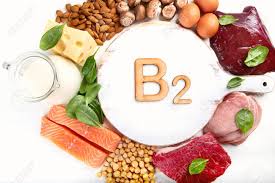
The following article suggests that by simply supplementing with Riboflavin (Vitamin B2) that the additional Riboflavin can make the enzyme necessary for this conversion to work like normal.

Supplementing with 5-methyl THF certainly works, however many readers I am sure would agree that targeting and resolving the cause of the problem
(the enzymatic conversion of 5,10-methylenetetrahydrofolate to 5-methyltetrahydrofolate (5-methyl THF) makes more sense – rather than targeting the effect.

In addition,  5-methyl THF is typically a practitioner grade supplement which the general population would not typically have access to – and most in this population would not understand the biochemistry/biochemical pathways involved and may actually exacerbate an existing problem (for example, initiating overmethylation can disrupt neurotransmitter balance).  Also 5-methyl THF is much more expensive vs. Riboflavin, a common and accessible B vitamin.

Many comprehensive B vitamin complexes may in fact have enough Riboflavin content to meet this need, and I am of the opinion that it is always best to take balanced ratios of the B vitamins – unless there is a specific identified need for a larger amount of a specific B vitamin(s).

Read More

Copyright (C) 2019 R. V. Lamberton & Associates All rights reserved.