Category: Toxins

Today I want to share with you an article which discusses different ways plastics can damage the body.

Are you looking to develop your own nutritional supplement formulations?  I can help you with that!  Reach out to me and we can discuss how I can help you.

As Ron suggests at the beginning of the article:

“Plastics (or the chemical name, phthalates) are now considered the number one pollutant in the human body”.

In the next edition of our newsletter I will share a further article from Ron which discusses how to detox plastic compounds out of the body.

This article was written by Ron Grisati from Functional Medicine University.

Ronald Grisanti D.C., D.A.B.C.O., D.A.C.B.N., M.S.,CFMP

Plastics (or the chemical name, phthalates) are now considered the number one pollutant in the human body. They make products flexible, durable, and these chemicals are also in items you would not consider to be plastics, like pesticides, detergents, cosmetics, medications, or your shampoo. They are found everywhere. It is difficult to completely avoid them. 

You can live in the most pristine place on planet earth and still find animals polluted with plastics.

It is an interesting fact that plasticizers are over 10,000 to 1,000,000 times higher in our bodies than any other toxins that have been found in EPA studies.

Unfortunately once in the body, these plastics do enormous damage.

7 Ways Plastics Damage the Body

1: Phthalates damage the chemistry of fatty acids most importantly, the fatty acid, DHA (docosahexaenoic acid). This is the fundamental chemistry necessary for making every cell lining or membrane. These fatty acids are the foundation for brain health including memory and recall.

2: Phthalates can create a zinc deficiency which will compromise the metabolism of vitamins A and B-6. In turn this could lead to conditions such as indigestion, depression, heart disease, cancer, diabetes, and accelerated aging. 

As a quick side note the combination of low zinc and low DHA can lead to chronic inflammation. Medical literature has clearly identified chronic inflammation as one of the most common underlying pathologies of most diseases leading to auto-immune diseases (rheumatoid arthritis, MS) to cancer and heart disease.

3: Phthalates has been found to be responsible for damaging the pancreas leading to diabetes, insulin resistance and metabolic syndrome X. 

4: Phthalates has been found to lower sulfation.  This means that you are no longer able to effectively detoxify like you should. This in turn can lead to a whole host of health challenges.

5: Phthalates damage hormone function, especially thyroid and testosterone.   

6: Phthalates can poison the peroxisomes needed for the control of the chemistry of cholesterol. They can cause high cholesterol while at the same time keep cholesterol from forming the “happy hormones” (neurotransmitters) of the brain. 

7: Phthalates can damage the body’s ability to make catalase. Catalase is absolutely essential for devouring up the hydrogen peroxide that cancer cells make to allow them to metastasize or wildly spread throughout the body. Lack of catalase is a reason why many cancers briefly seem to be in remission after treatments, only to resurface months or years later with lethal consequences.

These are only 7 of the devastating effects of plastics in our bodies. Many diseases will never be cured until the phthalates are out. 

Reference:

Rogers S, Detoxify or Die, Prestige Publishing, 2002

Ronald Peters, MD, MPH

I want to share with you today an article written by Ronald Peters, MD, MPH which gives an overview of a mechanism in the body which is activated when there is a perceived threat which could be viral, bacterial, toxic chemicals and metals etc. called: “The Cell Danger Response”.

Practitioners are familiar with the typical protective reactions that get activated in these situations, however where problems can arise is when this activation is not turned off after the threat has disappeared.  It is suggested that this can contribute to the development of chronic, degenerative disease processes.

This concept was originally hypothesized by Robert K. Naviaux in the published paper:

Metabolic features of the cell danger response, Robert K. Naviaux, Mitochondrion 16 (2014) 7–17 The Mitochondrial and Metabolic Disease Center, University of California, San Diego School of Medicine

It has started to gain a lot of traction within the Functional Medicine community and I would suggest it certainly warrants some consideration with respect to how we approach working with patients.


You and I are wired to escape danger by automatically firing the sympathetic nervous system so we can run away or fight to survive.  However, for the trillions of cells within our bodies, it is not so simple.  They cannot run away. They are programmed to survive dangerous invaders such as viruses and bacteria, toxic chemicals and metals such as mercury by activating the Cell Danger Response, or CDR.  Two key features of the CDR are reduced energy production (ATP) in the mitochondria and the release of inflammatory cytokines.   Once the threat is eliminated the CDR is witched off and energy production starts again, and we resume our normal lives.  However, sometimes the CDR does not stop and we stay fatigued and inflamed.  This pathological persistence of the CDR is believed to be a primary cause for many chronic diseases including autism, PTSD, chronic fatigue syndrome, rheumatoid arthritis and many more. In this article I will review the cell danger response, what turns it on, and, importantly, how you can turn it off once the danger has passed.

CELL DANGER RESPONSE – AN ANCIENT SURVIVAL SYSTEM

Dr Robert Naviaux at the University of California, San Diego School of Medicine has reviewed the choreography of micro-events that occur as the cells and organs of the body prepare to survive threats, such as invading viruses, bacteria, fungi and parasites, or, toxic chemicals and heavy metals like mercury, lead and aluminum, as well as excessive heat or radiation. Mitochondria are the powerhouses within our cells as they use oxygen to convert chemical energy from the foods we eat into an energy form that the cell can use, which is called ATP. There are thousands of mitochondria in our cells and they orchestrate the cell danger response, which includes the following:

In response to viral attack, mitochondria sound the alarm and reduce voltage and energy production to prevent the virus from hijacking DNA to make more viruses.

Intracellular attack releases mitochondrial proteins and ATP which sound the alarm to attract other immune cells to attack the invader.

Mitochondria reduce oxygen utilization (less ATP) and reactive oxygen species along with increased hydrogen peroxide are toxic to viruses and support the cell defense.

Bacterial endotoxins activate an enzyme within the mitochondria which decreases vitamin D, thus increasing inflammation, but raising the risk for autoantibodies, especially to the thyroid gland (Hashimoto’s thyroiditis).

Under the oxidizing conditions of the CDR, methionine metabolism is shifted to assist with the production of antimicrobial reactive oxygen species as well as other antiviral and antimicrobial compounds.

De-methylation of histones is stimulated by oxidizing conditions of the CDR to increase pro-inflammatory cytokines such as TNF alpha.

Sulfur metabolism within cells is shifted to create more glutathione for macrophages and to increase glutathione transport into the brain.

CDR stimulates an enzyme which produces histamine, a potent vasodilator which facilitates the delivery of increased oxygen and immune cells to sites of inflammation.

Arginine metabolism is shifted within mitochondria to create nitric oxide (NO) gas which inhibits mitochondrial energy production.

Damaged cells release hemoglobin and heme into the tissues which stimulates the production of carbon monoxide, a potent inhibitor mitochondrial ATP production.

Cell danger increases lipoxygenase which leads to cell wall peroxidation and stiffening of cells walls in the vicinity of the threat.

Tryptophan metabolism is shifted to increase kynurenic acid which induces IL-6 and inflammatory cytokine, as well as increasing many aspects of immune function.

Toxic metals like mercury, as well as some chemicals will try to steal electrons and the mitochondria respond by reducing cellular energy production to shield the cell from further injury.

Intracellular conditions produced by the CDR lead to sequestration, or accumulation of toxic metals such as mercury, lead, cadmium, aluminum, arsenic and others, as well as reduced elimination,

When functional vitamin D is decreased by a chronically active CDR, magnesium is lost from the cells.

GUT MICROBIOME IS ESSENTIAL TO HEALTHY CDR


According to Dr. Naviaux, “healthy metabolism acts as a survival engine that computes the optimum chemical solution for fitness based on the developmental history, current environmental conditions, and the genetic resources available to the individual.”

Metabolism is all of the chemical reactions that occur in the cells of the body. Billions are occurring every second to respond to the surrounding environment in order to sustain life and they are intricately dependent on the health of the microbes that live in your body, or, microbiome.  Since there are more bacterial in your body than cells, they have evolved to act as a “living shield to protect us from opportunistic pathogens and keep us healthy”.

About 99% of the bacteria in your body reside in your gut, consisting of 3,000 to 30,000 species which provide a metabolic and genetic diversity which far exceeds that of the human host.

Again, according to Dr. Naviaux, “the composition and function of the microbiome are best considered as an ecosystem that is continuously shaped by the developmental history, diet, health and activity of the host.”  Basically, when the host is sick, the microbiome is also sick.  The chronic activation of the CDR changes the ecosystem in the bowel and perpetuates disease in some people

RESOLUTION OF THE CDR

Once the danger or threat is eliminated, the CDR is turned off by a series of anti-inflammatory messages, normal mitochondrial energy is re-established, and normal cell life begins again.

However, based on genetic predisposition and the intensity and magnitude of the dangerous exposure a dysfunctional and persistent CDR can occur which is the precursor of many chronic diseases.

According to Dr. Naviaux, the following diseases result from a pathological persistence of the CDR:

  • autism spectrum disorders (ASD),
  • attention deficit hyperactivity disorder (ADHD),
  • food allergies,
  • asthma,
  • atopy,
  • emphysema,
  • Tourette’s syndrome,
  • bipolar disorder,
  • schizophrenia,
  • post-traumatic stress disorder (PTSD),
  • traumatic brain injury (TBI),
  • chronic traumatic encephalopathy (CTE),
  • suicidal ideation,
  • ischemic brain injury,
  • spinal cord injury,
  • diabetes,
  • kidney, liver, and heart disease,
  • cancer,
  • Alzheimer and
  • Parkinson disease,
  • autoimmune disorders like lupus, rheumatoid arthritis, multiple sclerosis,
  • primary sclerosing cholangitis.

According to Dr. Naviaux, each of the metabolic features of the CDR listed above “can be addressed individually with specific treatments, or more globally with a combination of supplements, dietary and activity changes, or with adaptogen therapies.”

I would add the following to the list:

  • Chronic fatigue syndrome
  • Irritable bowel syndrome
  • Fibromyalgia
  • Lyme’s disease
  • Mold related illness
  • Multiple chemical sensitivity
  • Chronic Inflammatory Response Syndrome
  • “Brain fog”

SUMMARY – CELL DANGER RESPONSE

Naviaux and other researchers have found the cell danger response is triggered by various types of environmental stressors:

  • Biological stressors such as viruses, bacteria, fungi such as mold, parasites and more
  • Chemical stressors such as toxic chemicals and heavy metals (e.g. mercury and lead)
  • Physical trauma such as an accident, burn, surgery, or physical abuse
  • Psychological trauma that creates overwhelm and persistent despair, such as the loss of a loved one, divorce, financial struggle, childhood emotional neglect

As Naviaux explains, these are triggers of illness, but they are not the cause of disease. As he presented to the Open Medicine Foundation on 9/28/2017, they all “ring the same bell – the cell danger response. “  In this new paradigm of disease, symptoms arise because a cell danger response gets stuck in the “on” position and can’t complete its healing cycle to turn itself back off as it is designed to do.

In most cases of persistent chronic illness lasting for > 3–6 months, mitochondria are not dysfunctional. They are just stuck in a developmental stage that was intended to be temporary, unable to complete the healing cycle”

Robert Naviaux, Mitochondrion 46, 2019

TURNING OFF THE CELL DANGER RESPONSE – CONSCIOUSNESS AS THE SOURCE AND CURE FOR DISEASE

Illness gives patients temporary permission to act in more open ways emotionally.  But if they cannot learn to give themselves that same permission when they are healthy, then the moment they get well, the old rules again apply, and they find themselves in the psychologically and physically destructive situation that first contributed to their illness.

 Carl Simonton, MD

The cell danger response is turned on by dangers perceived at the cellular level, or, by dangers perceived by the individual in their life experience.  Dr. Naviaux has described the cellular events that initiate the CDR.  And we all have experienced threatening or frightening life events.  The horrors of war can be overwhelming and a soldier will often suppress the intense emotions and later develop PTSD.  For the abused or abandoned child, strong emotions are automatically suppressed, only to be stored in the unconscious mind as an emotional wound.  These wounds will surface later in life and contribute to dis-ease of one kind or another. In both cases the CDR is ignited by the powerful “fight or flight” sympathetic nervous system as it births anger, fear and panic.

In order to turn off the CDR, once the danger has passed, we need to understand ourselves and how we create stress and handle emotions. Extensive medical research also shows that digestion, blood circulation, immune activity, hormone levels are but a few of the systems controlled by the mind. Dr. Candace Pert, the NIH researcher who discovered neurotransmitters, said it simply: “The more I look, (at the immune system) the more I’m convinced that emotions are running the show.”

Basically, we need to heed the “message of illness” and consider the dysfunctional beliefs and suppressed emotional pain that are expressed within the fabric of your body as dis-ease. Mindbody medicine is the science of healing at the level of consciousness and represents the next step in healthcare.  It is based on the disturbing and eternal truth that the body is governed by consciousness (both conscious and unconscious).

Mindbody medicine will help you learn the following:

  • The natural intelligence of your body is governed by consciousness.
  • The function of the sympathetic nervous system (SNS) which is activated by fear, worry, anger and frustration.
  • How to enhance your parasympathetic nervous system (PNS), which governs your immune system, proper digestion, and hormone production.
  • The nature of the stressful life experiences which precede illness and how they can be tracked back to childhood experiences.
  • Adverse Childhood Experiences (ACE) and how they compare to Post-traumatic Stress Disorder (PTSD).
  • What is the “limbic lock” associated with chronic disease?
  • How to create a healthy gut microbiome, which is required to quiet the CDR and enhance vagal activity.
  • How to find the personal meaning of disease.
  • How reduce stress and live from your heart, the seat of emotion, love, intuition, and “seeing the big picture”.
  • All dis-ease is a personal invitation for healing, growing and gaining self-knowledge, by making the unconscious mind conscious.
  • The “blessing” of the dis-ease in any area of your life as well as your body offers you a window into the stored pain in the unconscious mind and how it can be discharged thereby leading to greater levels of peace and happiness.
  • How to activate the powerful vagus nerve which turns off the SNS and CDR.

READ DR NAVIAUX RESEARCH PAPER

We all know that exposure to airborne particulate matter can cause health issues, however this paper published in Environmental Research suggests that the problem may be a lot worse than we thought as the study showed evidence of Alzheimer’s, Parkinson’s and motor neuron disease (MND) in young individuals.

Regards,

Rob

Summary:

  After examining the brainstems of 186 young Mexico City residents aged between 11 months and 27 years of age, researchers, found markers not only of Alzheimer’s disease, but also of Parkinson’s and of motor neuron disease (MND) too. These markers of disease were coupled with the presence of tiny, distinctive nanoparticles within the brainstem – their appearance and composition indicating they were likely to come from vehicle pollution.

FULL STORY


Researchers looking at the brainstems of children and young adults exposed lifelong to air pollution in Mexico City have discovered disturbing evidence of harm.

Previous studies have linked fine particulate air pollution exposure with Alzheimer’s disease, and researchers have also reported evidence of air pollution-derived nanoparticles in the frontal cortex of the brain.

But after examining the brainstems of 186 young Mexico City residents aged between 11 months and 27 years of age, researchers, including Professor Barbara Maher from Lancaster University, found markers not only of Alzheimer’s disease, but also of Parkinson’s and of motor neurone disease (MND) too. These markers of disease were coupled with the presence of tiny, distinctive nanoparticles within the brainstem — their appearance and composition indicating they were likely to come from vehicle pollution.

This has led researchers to conclude that air pollution of this nature — whether inhaled or swallowed — puts people at risk of potential neurological harm. The brainstem is the posterior part of the brain which regulates the central nervous system, controls heart and breathing rates, and how we perceive the position and movement of our body, including, for example, our sense of balance.

Professor Maher said: “Not only did the brainstems of the young people in the study show the ‘neuropathological hallmarks’ of Alzheimer’s, Parkinson’s and MND, they also had high concentrations of iron-, aluminium- and titanium-rich nanoparticles in the brainstem — specifically in the substantia nigra, and cerebellum.

“The iron-and aluminium-rich nanoparticles found in the brainstem are strikingly similar to those which occur as combustion- and friction-derived particles in air pollution (from engines and braking systems).

“The titanium-rich particles in the brain were different — distinctively needle-like in shape; similar particles were observed in the nerve cells of the gut wall, suggesting these particles reach the brain after being swallowed and moving from the gut into the nerve cells which connect the brainstem with the digestive system.”

The ‘neuropathological hallmarks’ found even in the youngest infant (11 months old) included nerve cell growths, and plaques and tangles formed by misfolded proteins in the brain. Damage to the substantia nigra is directly linked with the development of Parkinson’s disease in later life. Protein misfolding linked previously with MND was also evident, suggesting common causal mechanisms and pathways of formation, aggregation and propagation of these abnormal proteins.

The one thing common to all of the young people examined in the study was their exposure to high levels of particulate air pollution. Professor Maher says that the associations between the presence of damage to cells and their individual components — especially the mitochondria (key for generation of energy, and signalling between cells) — and these metal-rich nanoparticles are a ‘smoking gun’.

Such metal-rich particles can cause inflammation and also act as catalysts for excess formation of reactive oxygen species, which are known to cause oxidative stress and eventual death of neurons. Critically, the brainstems of age- and gender- matched controls who lived in lower-pollution areas have not shown the neurodegenerative pathology seen in the young Mexico City residents.

These new findings show that pollution-derived, metal-rich nanoparticles can reach the brainstem whether by inhalation or swallowing, and that they are associated with damage to key components of nerve cells in the brainstem, including the substantia nigra.

Even in these young Mexico City residents, the type of neurological damage associated with Alzheimer’s, Parkinson’s and motor neurone diseases is already evident. These data indicate the potential for a pandemic of neurological disease in high-pollution cities around the world as people experience longer lifespans, and full symptoms of earlier, chronic neurological damage develop.

Professor Barbara Maher said: “It’s critical to understand the links between the nanoparticles you’re breathing in or swallowing and the impacts those metal-rich particles are then having on the different areas of your brain.

“Different people will have different levels of vulnerability to such particulate exposure but our new findings indicate that what air pollutants you are exposed to, what you are inhaling and swallowing, are really significant in development of neurological damage.

“With this in mind, control of nanoparticulate sources of air pollution becomes critical and urgent.”


Story Source:

Materials provided by Lancaster University. Note: Content may be edited for style and length.


Journal Reference:

  1. Lilian Calderón-Garcidueñas, Angélica González-Maciel, Rafael Reynoso-Robles, Jessica Hammond, Randy Kulesza, Ingolf Lachmann, Ricardo Torres-Jardón, Partha S. Mukherjee, Barbara A. Maher. Quadruple abnormal protein aggregates in brainstem pathology and exogenous metal-rich magnetic nanoparticles (and engineered Ti-rich nanorods). The substantia nigrae is a very early target in young urbanites and the gastrointestinal tract a key brainstem . Environmental Research, 2020; 191: 110139 DOI: 10.1016/j.envres.2020.110139

Today I want to share with you an article from the Hormones Matter website written by  Chandler Marrs, PhD

The article focuses on the fact that many individuals are consuming Metformin considering it to be a magical anti-aging drug.

I am in agreement with Chandra in that personally I have have never been a fan.

There are several considerations for myself as to why I feel this way which she talks about in this article, such as deficiencies that can develop, negative effects on mitochondrial function and a potential negative impact on exercise performance.

I would suggest that berberine provides many of the same benefits as Metformin as well as some such as CV benefits that Metformin does not provide – and berberine does not have any of the same negative effects vs. Metformin.

Following is Chandler’s article

I have never been a fan of Metformin. It seemed too good to be true. Many years ago I had a conversation with a researcher about all of its possible therapeutic indications. His lab was actively pursuing the anti-cancer angle. That should have been a clue that Metformin might be causing more damage than we recognized, but it wasn’t. At that point, I was still enamored with the wonders of pharmacology and hadn’t yet begun my path toward understanding medication adverse reactions. Indeed, it wasn’t until very recently, when a family member began suffering from one of these reactions, that I began my investigation in full. This is what I learned.

Read More

Exposure to and accumulation of environmental toxins represents a major challenge to optimizing health in our current environment.

BPA – Bisphenol A is one of these environmental toxins which has received considerable coverage over the last several years.

The article I want to share with you today –from an article posted on the Science Daily website suggests that levels of accumulation in humans has been seriously underestimated.

This article was based upon a published study done at Washington State University and published in The Lancet Diabetes & Endocrinologythe citation is included at the end of this article.

Just before you read this information, here is an excerpt from an abstract on”Health Risk of Exposure to Bisphenol A” (abstract included at the end of this article) on some of the potential issues that exposure to BPA may cause:

” Due to its phenolic structure BPA has been shown to interact with estrogen receptors and to act as agonist or antagonist via estrogen receptor (ER) dependent signalling pathways. Therefore, BPA has been shown to play a role in the pathogenesis of several endocrine disorders including female and male infertility, precocious puberty, hormone dependent tumours such as breast and prostate cancer and several metabolic disorders including polycystic ovary syndrome (PCOS)”

Due to the prevalence of exposure to BPA in our environment – as well as other chemicals and heavy metals periodic monitoring and supervised detox programs to clear out this toxin load are serious considerations for optimizing health and potentially extending healthspan.

Summary:

  Researchers have developed a more accurate method of measuring bisphenol A (BPA) levels in humans and found that exposure to the endocrine-disrupting chemical is far higher than previously assumed. The study provides the first evidence that the measurements relied upon by regulatory agencies, including the US Food and Drug Administration, are flawed, underestimating exposure levels by as much as 44 times. Researchers have developed a more accurate method of measuring bisphenol A (BPA) levels in humans and found that exposure to the endocrine-disrupting chemical is far higher than previously assumed.

The study, published in the journal The Lancet Diabetes & Endocrinology on Dec. 5, provides the first evidence that the measurements relied upon by regulatory agencies, including the U.S. Food and Drug Administration, are flawed, underestimating exposure levels by as much as 44 times.

“This study raises serious concerns about whether we’ve been careful enough about the safety of this chemical,” said Patricia Hunt, Washington State University professor and corresponding author on the paper. “What it comes down to is that the conclusions federal agencies have come to about how to regulate BPA may have been based on inaccurate measurements.”

BPA can be found in a wide range of plastics, including food and drink containers, and animal studies have shown that it can interfere with the body’s hormones. In particular, fetal exposure to BPA has been linked to problems with growth, metabolism, behavior, fertility and even greater cancer risk.

Despite this experimental evidence, the FDA has evaluated data from studies measuring BPA in human urine and determined that human exposure to the chemical is at very low, and therefore, safe levels. This paper challenges that assumption and raises questions about other chemicals, including BPA replacements, that are also assessed using indirect methods.

Hunt’s colleague, Roy Gerona, assistant professor at University of California, San Francisco, developed a direct way of measuring BPA that more accurately accounts for BPA metabolites, the compounds that are created as the chemical passes through the human body.

Previously, most studies had to rely on an indirect process to measure BPA metabolites, using an enzyme solution made from a snail to transform the metabolites back into whole BPA, which could then be measured.

Gerona’s new method is able to directly measure the BPA metabolites themselves without using the enzyme solution.

In this study, a research team comprised of Gerona, Hunt and Fredrick vom Saal of University of Missouri compared the two methods, first with synthetic urine spiked with BPA and then with 39 human samples. They found much higher levels of BPA using the direct method, as much as 44 times the mean reported by the National Health and Nutrition Examination Survey (NHANES). The disparity between the two methods increased with more BPA exposure: the greater the exposure the more the previous method missed.

Gerona, the first author on the paper, said more replication is needed.

“I hope this study will bring attention to the methodology used to measure BPA, and that other experts and labs will take a closer look at and assess independently what is happening,” he said.

The research team is conducting further experiments into BPA measurement as well as other chemicals that may also have been measured in this manner, a category that includes environmental phenols such as parabens, benzophenone, triclosan found in some cosmetics and soaps, and phthalates found in many consumer products including toys, food packaging and personal care products.

“BPA is still being measured indirectly through NHANES, and it’s not the only endocrine-disrupting chemical being measured this way,” Gerona said. “Our hypothesis now is that if this is true for BPA, it could be true for all the other chemicals that are measured indirectly.”

This study was supported by grants from the National Institutes of Health.


Story Source:

Materials provided by Washington State University. Original written by Sara Zaske. Note: Content may be edited for style and length.


Journal Reference:

  1. Roy Gerona, Frederick S vom Saal, Patricia A Hunt. BPA: have flawed analytical techniques compromised risk assessments? The Lancet Diabetes & Endocrinology, 2019; DOI: 10.1016/S2213-8587(19)30381-X

Rocz Panstw Zakl Hig. 2015;66(1):5-11.

Health risk of exposure to Bisphenol A (BPA).

Konieczna A1, Rutkowska A1, Rachoń D1.  

Abstract

Bisphenol A (BPA) belongs to chemicals that are produced in large quantities worldwide. It is commonly used as monomer in polycarbonate synthesis, plasticizer in the production of epoxy resins, as well as an additive for the elimination of surfeit of hydrochloric acid during the polyvinyl chloride (PVC) production. BPA is not only used in the production of plastics intended to a direct contact with food, including plastic packaging and kitchenware, but also in inner coatings of cans and jar caps. There are various routes of human exposure to this substance such as oral, by inhalation and transdermal. The main sources of exposure to BPA include food packaging and dust, dental materials, healthcare equipment, thermal paper, toys and articles for children and infants. BPA is metabolized in the liver to form bisphenol A glucuronide and mostly in this form is excreted with urine. Due to its phenolic structure BPA has been shown to interact with estrogen receptors and to act as agonist or antagonist via estrogen receptor (ER) dependent signalling pathways. Therefore, BPA has been shown to play a role in the pathogenesis of several endocrine disorders including female and male infertility, precocious puberty, hormone dependent tumours such as breast and prostate cancer and several metabolic disorders including polycystic ovary syndrome (PCOS).

Because of the constant, daily exposure and its tendency to bio-accumulation, BPA seems to require special attention such as biomonitoring. This observation should include clinical tests of BPA concentration in the urine, which is not only one of the best methods of evaluation of the exposure to this compound, but also the dependence of the daily intake of BPA and the risk of some endocrine disorders. PMID: 25813067

One of the major issues causing problems with losing weight and maintaining a healthy weight is due to the presence of chemicals in the body – environmental toxins.

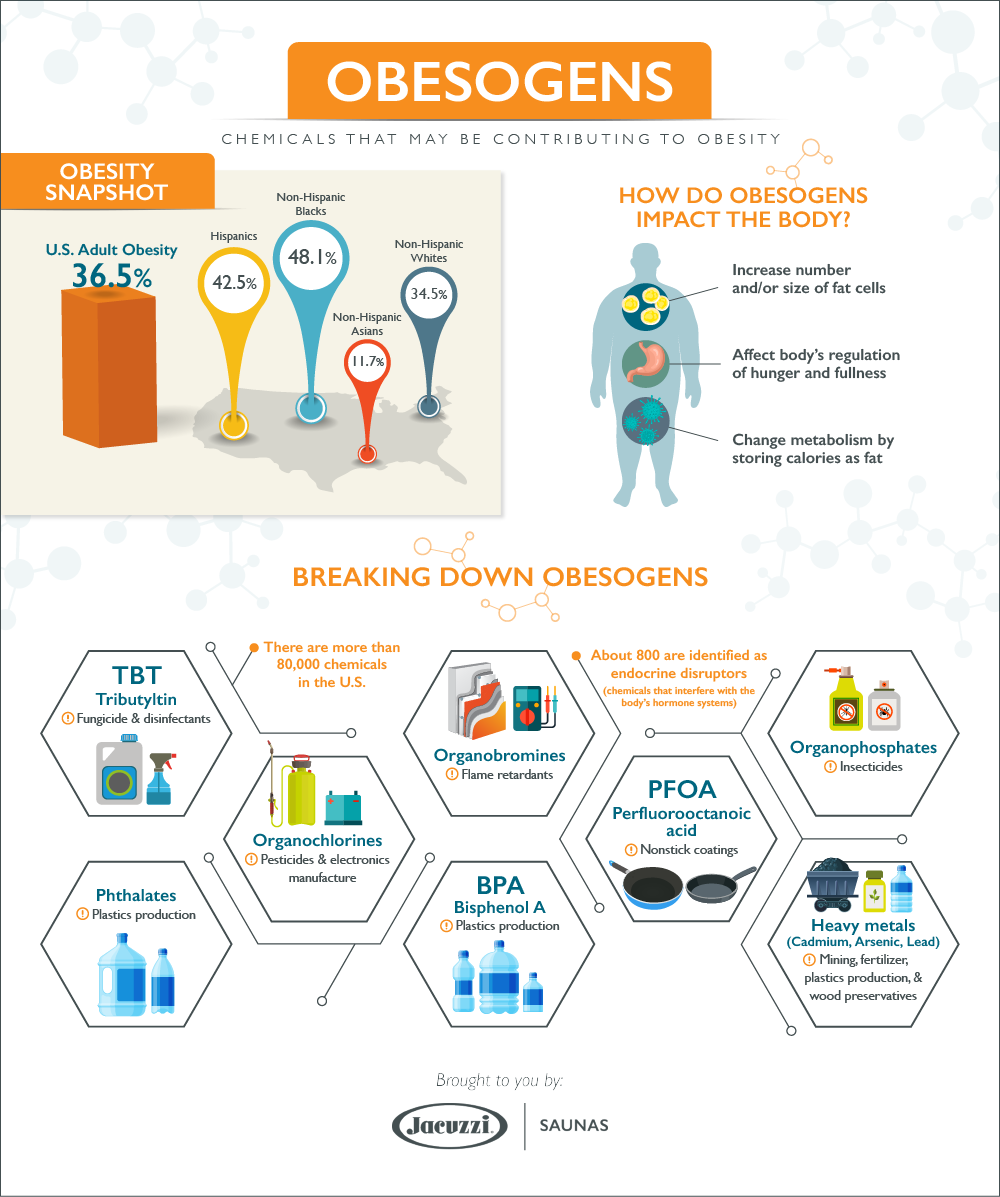
Some of these chemicals are called “obesogens” – because they cause obesity and it is almost impossible for an individual to lose weight until these compounds are removed.

A key compound in this category is phthalates, often referred to as plasticizers.

Weight issues for individuals have reached epidemic proportions across the world – in the U.S. alone, 39.8% of adults aged 20 and over are obese.

Historically, the suggested solution to this significant issue was to eat less and exercise more – in fact this is the advice that most MDs will currently suggest to their patients who are struggling with weight issues.

Losing weight and maintaining a healthy weight is certainly not as simple as eating less and exercising more, although these factors can provide benefits.

Other factors may include, and this is certainly not an exhaustive list the following – hormonal imbalance, including elevated cortisol levels, inflammation, genetic mutations, a diet which includes poor quality food sources, lack of sleep, stress and many more.

The way to rid the body of these chemicals is through a supervised detox program.

This should be done under the supervision of a health care practitioner knowledgeable in this area as freeing up these chemicals can cause significant problems if the body has not been prepared properly to excrete these chemicals.

Following is an article published by Functional Medicine University which discusses this topic.

Difficulty Losing Fat? This May Be the Cause

Ronald Grisanti D.C., D.A.B.C.O., DACBN, MS, CFMP

Obesity has hit epidemic proportions and the world is desperate to do anything to lose their unwanted fat.

Although eating a healthy diet and exercise is paramount to losing fat, there is one little unknown fact that will prevent millions of people from ever losing fat.

According to the US government this one thing is the considered the number one pollutant in the human body and will put a quick halt to ever reaching your desired level of fitness and fat loss.

One of the major causes of the obesity epidemic is the unprecedented level of phthalates or plasticizers.

The problem with these toxic environmental toxins is the fact that they are difficult to impossible to avoid. In fact they are found in every species even in the most pristine wild.

In fact we have so damaged the chemistry of even animals in the wild that the polar bears in the Arctic have human diseases such as hypothyroidism and osteoporosis.

Phthalates are the highest pollutant in the body being over 10,000 times higher than any of the thousands of other environmental toxins.

In fact they are so pervasive that now children six years of age have levels that used to take adults until the age of 40 to accumulate.

Phthalates are the highest pollutant in the body being over 10,000 times higher than any of the thousands of other environmental toxins.

Phthalates are the highest pollutant in the body being over 10,000 times higher than any of the thousands of other environmental toxins.

The government agencies, scientific and medical literature have clearly documented that a huge amount of these environment toxins (phthalates) come from our water, soda and infant formula bottles, food packaging, cosmetics, nail polish, mattresses, couches, carpets, clothing, medications, styrofoam cups, IVs, vinyl flooring, construction materials, home wiring, computers, industrial and auto exhausts, etc.,

The sad point is the fact that these toxins stockpile in the body and overwhelm our ability to detoxify them.

We routinely measure them with a wonderful test called Phthalates & Parabens Profile (https://www.gdx.net/product/phthalates-parabens-test-urine)

In addition to the damage these environmental toxins do to the biochemistry of losing fat they have also been known to be associated with difficult to treat chronic fatigue syndrome,fibromyalgia, ADD,  syndrome X, diabetes, arteriosclerosis, allergies, and much more.

In fact the label that a disease has is now unimportant. All we care about is what caused the disease and what biochemical corrections are necessary to get rid of it and actually bring about a true solution, a word you rarely hear in drug-oriented medicine.

What is even worse is the fact a pregnant mother’s phthalate levels (look at how many are continually drinking from plastic water bottles, etc., thinking that it’s something healthful) hugely influence not only the development of the child’s brain and glands, but even future fertility and cancers in their unborn children, not to mention, of course, obesity.

What you need to understand and something the researchers have forgot to mention is the fact that fat stores a huge amount of our chemicals, so the fatter you are the more the difficult it is to lose fat. Interesting and at the same time depressing.

The bottom line is many people will never lose weight or solve their medical problems because they have not gotten rid of the phthalates and other environmental pollutants that have damaged their chemistry and genetics.

One of the key ingredients to ridding the body of these harmful toxins is first to do what you can to avoid it (STOP DRINKING OUT OF STYROFORM CUPS and PLASTIC BOTTLES) and invest in a far infrared sauna

References:

Heindal JJ, Endocrine disruptors and the obesity epidemic, Toxicol Sci 76; 2:247-49, 2003

Baillie-Hamilton PF, Chemical toxins: a hypothesis to explain the global obesity epidemic, JAIt Complement Med 8;2:185-92, 2002

Alonso-Magdalena P, et al, The estrogenic effect of bisphenol A disrupts pancreatic B-cell function in vivo and induces insulin resistance, Environ Health Perspect 114:106-12, 2006

The Hundred Year Diet in the Wall Street (May 10, 2010, A I5)

Vom Saal FS, Welshons WV, Large effects from small exposures. II. The importance of positive controls in low-dose research on bisphenol A, Environ Res, 100;1:50-76, Jan. 2006

Feige JN, et al, The endocrine disruptor monoethyl-hexyl phthalate is a selective peroxisome proliferator-activated receptor gamma modulator that promotes adipogenesis, JBiol Chem 282:19152-66, 2007

Hatch EE, et al., Association of urinary phthalate metabolite concentrations with a body mass index and waist circumference: a cross-sectional study of NHANES data, 1999-2002, Environ Health 7:27, 2008

Clark K, et al, Observed concentrations in the environment. In: The Handbook of Environmental Chemistry. Vol 3, Part Q. Phthalate Ester (Staples CA, ed). New York: Springer, 125-177, 2003

Feige JN, et al, The pollutant diethylhexyl phthalate regulates hepatic energy metabolism via species-specific PPARa-dependent mechanisms, Environ Health Persp, 118; 2:234-41, Feb 2010

Jaakkola JJK, et al, The role of exposure to phthalates from polyvinyl chloride products in the development of asthma and allergies: A systematic review and meta-analysis, Environ Health Perspect 116:845-53, 2008