Category: Hormones

Systems Homeostasis Perspective

This article approaches chronic dysfunction through a systems homeostasis lens, emphasizing stress physiology, neuroendocrine regulation, and downstream tissue tolerance rather than isolated organ-based causality.

A Systems Perspective on Stress, Regulation, and Downstream Dysfunction

It’s increasingly common to hear the phrase: “All health and disease start in the gut.”

This view exists for good reason. The gastrointestinal system is central to digestion, immunity, inflammation, and nutrient assimilation. It is richly innervated, metabolically demanding, and highly responsive to environmental inputs. When systems are under strain, the gut is often one of the first places dysfunction becomes visible.

But visibility is not the same as origin.

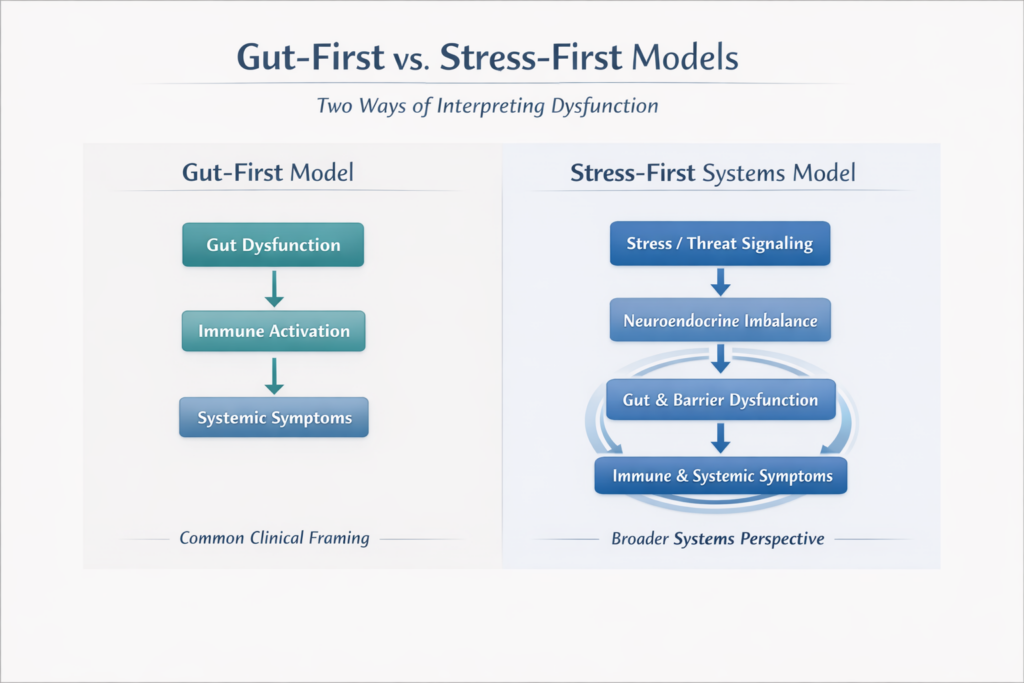
From a systems homeostasis and neuroendocrine perspective, chronic dysfunction rarely begins in the gut. More often, it begins with stress signaling and loss of regulatory control, with gastrointestinal dysfunction emerging downstream.


Why the Gut Often Appears to Be the Starting Point

The gut is uniquely sensitive to systemic stress because it is:

  • highly dependent on autonomic balance
  • energetically expensive to maintain
  • tightly coupled to immune signaling
  • responsive to circadian and neuroendocrine regulation

When stress physiology becomes chronic, digestive capacity, motility, barrier integrity, and immune tolerance are among the first functions to degrade.

This makes the gut an excellent early indicator of dysregulation — but not necessarily the primary driver.


Stress as the Upstream Signal

In a systems-based model, stress precedes dysfunction.

Stress here is not limited to psychological stress. It includes:

  • perceived threat
  • sleep disruption
  • metabolic strain
  • inflammatory load
  • under-recovery
  • circadian mismatch

These stressors converge on the HPA axis, autonomic nervous system, and neuroimmune signaling, altering how energy is allocated, how barriers are maintained, and how inflammation is resolved.

As regulatory capacity declines, gastrointestinal function adapts accordingly — often by reducing digestive output, increasing permeability, and activating immune defenses.


When Treating the Gut Alone Falls Short

When dysfunction is assumed to start in the gut, practitioners may:

  • over-target gastrointestinal findings
  • escalate protocols based on lab abnormalities
  • miss upstream drivers of reduced tolerance
  • unintentionally increase total system load

In these cases, improving gut markers does not reliably translate into improved clinical outcomes — not because gut work is misguided, but because the system driving the dysfunction has not been addressed.


A More Accurate Systems Sequence

From a neuroendocrine systems perspective, dysfunction more often follows this pattern:

Stress / Threat Signaling

→ Neuroendocrine Dysregulation

→ Autonomic Imbalance

→ Loss of Digestive Capacity

→ Barrier Dysfunction

→ Immune Activation

→ Systemic Symptoms

The gut is central — but it is not primary.


Why This Distinction Matters Clinically

Recognizing the gut as a downstream responder rather than the origin allows care to become:

  • better sequenced
  • less aggressive
  • more tolerable
  • more sustainable

Interventions shift from correcting findings to restoring regulatory capacity, often allowing gastrointestinal function to normalize as part of broader recovery.


Systems Reminder

You don’t treat where dysfunction appears.

You treat the system that made dysfunction necessary.

The gut tells an important story — but it is rarely the first chapter.


How I Work

I approach clinical and formulation work through a systems homeostasis framework, prioritizing stress physiology, regulatory capacity, and intervention tolerance before targeting downstream findings. This sequencing supports recovery rather than overwhelming already stressed systems.


Selected References

Systems Homeostasis Perspective

This article approaches gastrointestinal, immune, and neurological reactivity through a systems homeostasis lens—focusing on regulation, tolerance, and recovery rather than symptom suppression or isolated mechanisms.

Why “Histamine Intolerance” Is Usually a Barrier and Regulation Disorder

Histamine intolerance is increasingly common in integrative and functional medicine practices. Individuals present with food reactions, flushing, headaches, anxiety, gut symptoms, rashes, palpitations, or a sense that “everything triggers me now.”

The usual explanations focus on food lists, genetics, or histamine suppression. While these approaches can reduce symptoms temporarily, they often fail to explain why tolerance was lost in the first place.

From a systems homeostasis perspective, histamine intolerance is rarely a primary histamine problem. It is most often a barrier, degradation, immune, and nervous system regulation problem.


Histamine Is a Normal Signal, Not a Toxin

Histamine is an essential signaling molecule involved in immune surveillance, gastric acid secretion, vascular tone, neurotransmission, and tissue repair.

In a regulated system, histamine rises and falls appropriately and is rapidly degraded. Problems arise not because histamine exists, but because clearance and resolution fail to keep pace with signaling load.


DAO: Degradation Capacity, Not a Cure

Diamine oxidase (DAO) is the primary enzyme responsible for degrading luminal histamine in the gut. It is produced by healthy enterocytes and functions as a first-pass clearance mechanism.

DAO capacity is reduced by intestinal inflammation, mucosal injury, oxidative stress, impaired nutrient status, and loss of epithelial integrity.

DAO supplementation can reduce symptoms, but it does not resolve the upstream reason DAO production declined. When used as a permanent strategy, it often masks barrier failure rather than correcting it. DAO is best understood as temporary load management, not resolution.


Zonulin and Barrier Regulation

Zonulin regulates intestinal tight junctions and therefore permeability. Elevated zonulin reflects loss of barrier control, allowing luminal antigens to interact with the immune system.

This has two critical consequences:

  • Immune activation increases histamine release
  • DAO production declines as enterocyte health deteriorates

Barrier dysfunction therefore both raises histamine signaling and reduces histamine clearance at the same time.


Mast Cells: Effectors, Not the Root Cause

Mast cells are highly sensitive immune sentinels concentrated at barrier surfaces. In a regulated system, mast cell activation is precise, proportional, and self-resolving.

In dysregulated systems, mast cells become chronically reactive—not because they are defective, but because the environment remains threatening.

Drivers of mast cell overactivity include:

  • barrier disruption
  • persistent immune signaling
  • impaired histamine degradation
  • nervous system threat signaling

Mast cells are responding appropriately. The system is failing to resolve the signal.


Nervous System Signaling and Histamine Reactivity

Mast cells express receptors for stress-related neuropeptides such as CRH and substance P. Chronic stress, sympathetic dominance, and low vagal tone lower the activation threshold for mast cell degranulation.

This explains why symptoms flare with stress, feel unpredictable, and often improve when the system is calmed—even before laboratory markers normalize.

Histamine intolerance is therefore both an immune and a neuro-regulatory phenomenon.


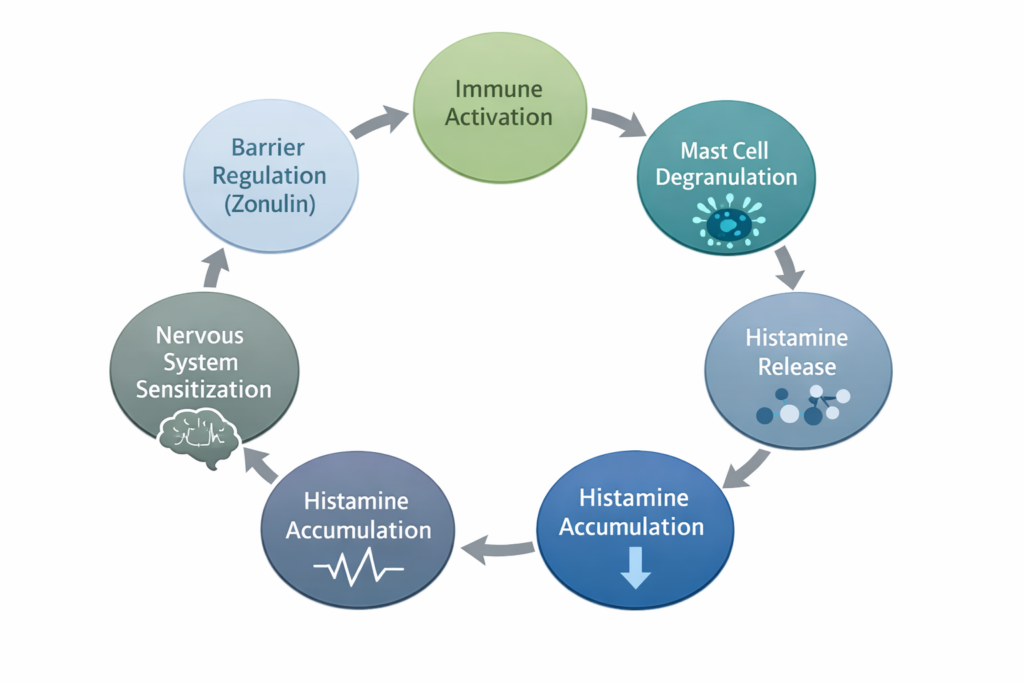
The Systems Loop

Taken together, the pattern is clear:

Barrier disruption (zonulin)

→ immune activation

→ mast cell degranulation

→ histamine release

→ reduced DAO clearance

→ histamine accumulation

→ nervous system sensitization

→ further mast cell activation and barrier stress

Suppressing one node shifts load elsewhere. Resolution requires restoring regulation.


Why Food Avoidance and DAO Alone Fail

Low-histamine diets and DAO supplementation reduce incoming load but do not restore barrier integrity, normalize immune tone, rebuild enzymatic capacity, or recalibrate nervous system signaling.

Over time, restriction often reduces resilience further, reinforcing sensitivity instead of restoring tolerance.


A note on Mast Cell Activation Syndrome (MCAS)

It’s important to distinguish between mast cell overactivity within a dysregulated system and true mast cell activation syndromes.

Many individuals experiencing histamine intolerance do not have primary mast cell disease. In these cases, mast cells are responding appropriately to unresolved immune, barrier, and nervous system threat signals.

There are, however, situations where mast cell activation becomes persistent and poorly regulated, requiring a different level of clinical consideration. Because this distinction matters—both clinically and ethically—a separate article will follow examining Mast Cell Activation Syndrome (MCAS) through a systems homeostasis lens.


Systems Reminder

Interventions only work when the system has the capacity to tolerate them.

DAO reduces histamine load.

Tolerance returns only when barrier regulation, immune signaling, and nervous system tone are restored.


How I Work

I approach health, formulation, and clinical decision-making through a systems homeostasis framework, prioritizing capacity, tolerance, recovery, and regulation before escalation. Rather than chasing symptoms, markers, or isolated pathways, I focus on sequencing interventions so the system can safely respond instead of being overwhelmed.

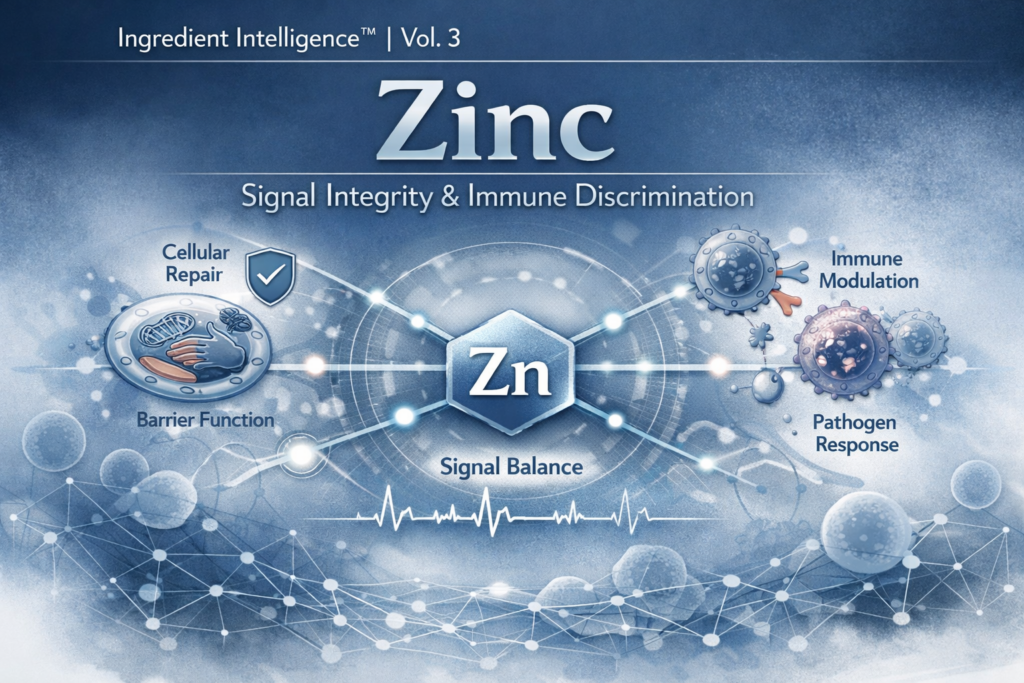
INGREDIENT INTELLIGENCE™ | VOL. 3

Zinc is often described as an “immune booster.”

That framing explains why zinc is frequently misunderstood — and frequently misused.

Zinc does not push physiology forward.

It calibrates how systems respond.

From a systems homeostasis perspective, zinc functions as a regulator of signal integrity. It sits at the intersection of immune signaling, tissue repair, transcriptional control, and barrier function — not to amplify responses, but to ensure they are appropriate, proportional, and resolvable.

When zinc availability is sufficient, communication between systems is clear. When it is not, signaling becomes noisy, exaggerated, or poorly coordinated.

What Zinc Insufficiency Looks Like Systemically

Zinc insufficiency rarely presents as a single, obvious deficiency. Instead, it often appears as patterns of reduced tolerance:

  • slower tissue repair
  • impaired barrier integrity
  • blunted or dysregulated immune responses
  • reduced resilience under physiological stress

These patterns reflect loss of coordination, not lack of force.

The Hidden Trade-Off

Because zinc supports immune and repair pathways, it is often assumed that more zinc equals better protection. In practice, chronic zinc loading can distort signaling balance, interfere with complementary mineral systems, and reduce long-term resilience.

Zinc does not reward excess.

It rewards precision and context.

Zinc Through a Systems Homeostasis Lens

Within systems homeostasis, zinc acts as a boundary regulator — helping determine:

  • when immune activation is appropriate
  • when repair should proceed
  • when signaling should resolve

In low-reserve systems, zinc mismanagement can amplify fragility rather than restore resilience. Its value depends entirely on energetic context, inflammatory load, and recovery capacity.

Closing Principle

Zinc strengthens systems not by pushing them harder, but by helping them respond appropriately.

When resilience is the goal, signal integrity matters more than stimulation.


🔗

Clinical & Professional Context

This systems-based framework reflects the same approach used in both clinical practice and professional consulting.

Clinical services: OptimumHealthConsulting.com

OptimumHealthConsulting.com

If you’re a clinic, practitioner, or company interested in formulation strategy or systems-based ingredient design:

Formulation & professional consulting:

HealthspanFormulations.com

We don’t have a health information problem.

We have an architecture problem.

More courses, more credentials, and more content haven’t made people healthier — because most health education still teaches parts, not systems.

When physiology is taught without coordination, responsibility, and context, knowledge becomes noise.


The Real Gap in Health Education

Health is governed by the same core physiological systems in everyone:

stress regulation, digestion, immune signaling, and energy metabolism.

What differs is not the systems — but who is interpreting them and acting on them.

Most education ignores this distinction.


Systems Homeostasis as an Educational Framework

The Systems Homeostasis Architecture focuses on coordination rather than isolated optimization.

Instead of asking “What is broken?”, it asks:

  • How is physiological load distributed?
  • Where is adaptive capacity constrained?
  • Which systems are compensating — and at what cost?

This systems lens reflects how biology actually functions — not how it is often taught.


Why Education Must Be Tiered by Clinical Responsibility

A single educational pathway cannot responsibly serve everyone.

As part of this work, the Systems Homeostasis Architecture is being developed into a tiered education model across three distinct tracks:

General Public

  • Foundational systems literacy
  • Practical nutrition and lifestyle decisions
  • Support for self-regulation without medicalization

Allied Healthcare Professionals (RDs, nutritionists, health coaches)

  • Systems-level assessment and pattern recognition
  • Nutrition and lifestyle interventions within scope
  • Clear escalation and referral boundaries

Medical Professionals (MDs, DOs, NDs – North American market)

  • Systems homeostasis as a clinical overlay
  • Managing therapeutic load, metabolic reserve, and recovery capacity
  • Integration with diagnostics and pharmacology

Each track shares the same core architecture — but differs in depth, language, and clinical responsibility.


Why This Matters

When education is not stratified:

  • Complexity is oversimplified, or
  • Application exceeds appropriate scope.

Neither leads to better outcomes.

Systems thinking only works when paired with responsibility-aware education.


Closing Perspective

Physiology does not change — responsibility does.

Education that respects this distinction builds clarity, safety, and real-world effectiveness across the health ecosystem.

For those interested in how this systems framework is applied in clinical and professional settings:

OptimumHealthConsulting.com

Ingredient Intelligence™ Vol. 2

A systems-based series examining ingredients through the lens of systems homeostasis — how nutrients influence stress, digestion, immune signaling, and cellular energy as part of an interconnected physiological loop

Magnesium is often discussed as if it treats isolated symptoms — cramps, anxiety, poor sleep, headaches.

That framing misses its real role.

From a systems homeostasis perspective, magnesium is not a symptom-targeted intervention.

It is a regulatory mineral that influences how multiple systems coordinate under load.

Rather than asking “What symptom does magnesium treat?”, the more useful question is:

Which system is under strain — and how does magnesium availability affect the system’s ability to adapt?


Magnesium Across Core Systems

Stress & Nervous System Tone

Chronic stress increases magnesium demand and loss. As availability declines, excitatory signaling rises and recovery capacity falls. Magnesium doesn’t sedate — it supports regulatory balance.

GI Function & Absorption

Magnesium supports smooth muscle tone and motility, yet depends on adequate digestion for absorption. Poor GI function reduces magnesium uptake, while low magnesium further impairs GI performance — a self-reinforcing loop.

Immune Signaling & Inflammatory Load

Magnesium participates in immune regulation and barrier integrity. Insufficiency is associated with elevated inflammatory tone and reduced immune tolerance, shifting the system toward chronic activation.

Energy & Mitochondrial Output

ATP is biologically active only when bound to magnesium. Energy availability is therefore constrained not only by calories or oxygen, but by mineral sufficiency. Fatigue is often a systems outcome, not an energy intake problem.


Why Responses to Magnesium Vary

Some people experience immediate benefit.

Others notice little change.

Some feel worse.

From a systems perspective, this variability is expected. Magnesium does not act in isolation — its effects depend on stress load, digestive capacity, immune tone, and baseline energy efficiency.

Form, timing, and context matter because systems state matters.


Systems Takeaway

Magnesium does not “fix” symptoms.

It supports coordination across systems.

When stress is high, digestion is compromised, immune signaling is elevated, or energy production is inefficient, magnesium often becomes a limiting factor — not because it is extraordinary, but because systems rely on it.

This is Ingredient Intelligence™ in practice.

Preservatives are one of the great conveniences of modern life.

They allow food to travel farther, last longer, and remain visually appealing weeks or months after production. From a supply-chain perspective, they solve real problems.

From a biological perspective, however, preservatives are not neutral.

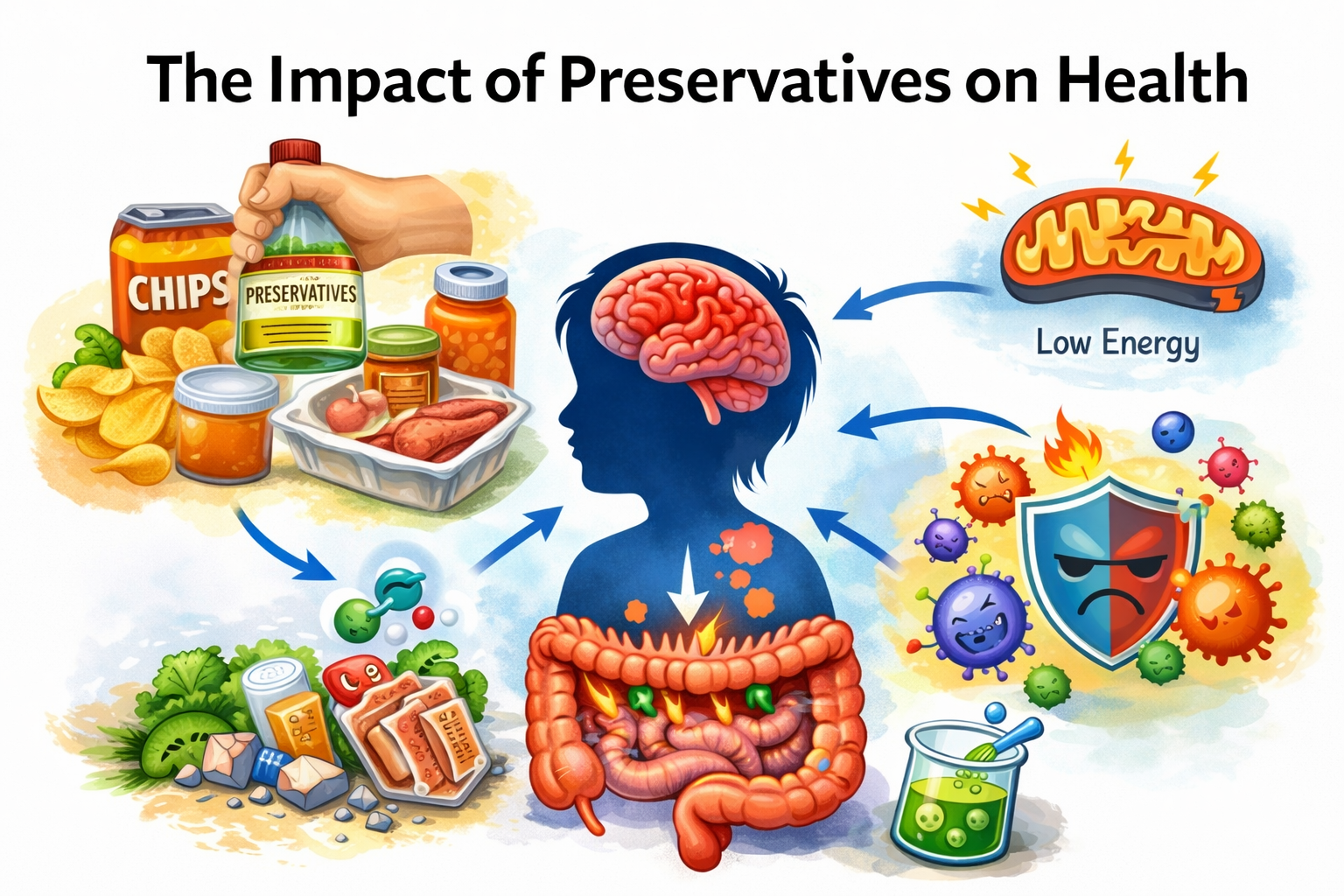
They are chemical inputs that interact with living systems — particularly the gut, immune system, and cellular energy machinery. And when exposure is frequent, layered, and begins early in life, those interactions matter.

The image above illustrates a systems-based reality that is increasingly difficult to ignore.


Preservatives Don’t Act in Isolation

Most discussions about preservatives focus on individual safety thresholds:

“Is this ingredient approved?”

“Is it below the allowable daily intake?”

Those questions are necessary — but insufficient.

Biology doesn’t experience ingredients one at a time.

It experiences total exposure.

Children today are exposed to preservatives across:

  • Packaged foods and snacks
  • Beverages
  • Condiments and sauces
  • Medications
  • Supplements

Each exposure may be small. The cumulative biological load is not.


The Gut: First Contact, First Consequence

The gastrointestinal tract is the primary interface between preservatives and the body.

Many preservatives are antimicrobial by design. While this helps prevent spoilage, it also means they can influence the gut ecosystem — especially with repeated exposure.

Even subtle shifts in gut ecology can affect:

  • Microbial diversity
  • Barrier integrity
  • Neurotransmitter production
  • Immune signaling

In developing children, where the gut–immune–brain axis is still maturing, these effects may be amplified.


Immune Activation Has a Metabolic Price

When the gut environment changes, the immune system responds.

Not always dramatically. Often quietly.

Low-grade immune activation still requires energy. It still requires resources. And it still competes with other biological priorities such as growth, repair, learning, and emotional regulation.

This is one reason symptoms that appear unrelated — fatigue, irritability, poor recovery, reduced resilience — often share a common underlying theme: energetic strain.


Mitochondria: The Overlooked Middle Layer

Mitochondria sit at the crossroads of:

  • Detoxification
  • Immune function
  • Neurological performance
  • Metabolic flexibility

When exposure load increases, mitochondrial efficiency can decrease — not catastrophically, but incrementally.

The result isn’t acute illness.

It’s reduced physiological margin.

Less buffer.

Less adaptability.

Less resilience.

Over time, that matters.


This Is Not About Fear — It’s About Formulation

This conversation is often mischaracterized as alarmist or anti-modern.

It shouldn’t be.

Preservatives are not inherently “bad.”

But they are biologically active.

And that means formulation choices matter.

The question is no longer:

“Can we use preservatives?”

It’s:

“Which ones, at what levels, in what combinations, and for whom?”

A developing child is not a scaled-down adult.

A chronically stressed system is not a resilient one.

A formulation optimized for shelf life is not automatically optimized for biology.


Why This Matters Beyond Food

This discussion extends well beyond packaged snacks.

It applies equally to:

  • Functional beverages
  • Nutritional supplements
  • Pediatric formulations
  • Clinical nutrition products

Ironically, many products designed to “support health” still rely on preservative strategies that increase biological load elsewhere.

That contradiction is becoming harder to justify.


A Systems Lens Changes the Conversation

When we view health through a systems lens, several things become clear:

  • No single ingredient explains complex outcomes
  • Cumulative exposure matters more than isolated thresholds
  • Energy availability is a limiting factor in resilience
  • Formulation is a biological decision, not just a technical one

This perspective doesn’t demand perfection.

It demands intentionality.


The Opportunity Ahead

As clinicians, formulators, and health innovators, we have an opportunity to do better — not by eliminating modern tools, but by using them more intelligently.

That means:

  • Reducing unnecessary additives where possible
  • Choosing preservative strategies with lower biological cost
  • Designing products that support, rather than tax, human systems

Convenience doesn’t have to come at the expense of resilience.

But biology always keeps the score.


#SystemsBiology #FunctionalNutrition #GutBrainAxis #MitochondrialHealth #ProductFormulation #Healthspan #RobLamberton #RobertLamberton