Category: Disease Conditions

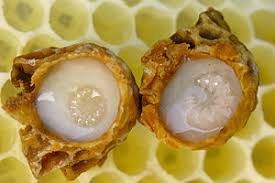
Royal jelly from the bee hive has been suggested to provide a range of health benefits to humans: I personally have found it to be of benefit for sleep as well as adrenal support.

Here are some of the suggested health benefits of royal jelly from the website Self Hacked:

Although chemically diverse, royal jelly mostly acts by [R, R]:

  • Fighting microbes and reducing inflammation, mostly via royalisin (10H2DA)
  • Fighting bacteria through jelleines
  • Boosting antioxidant defense, via flavonoids [R]
  • Royal Jelly Boosts Reproductive Health
  • Royal Jelly May Help with Diabetes3) Royal Jelly Reduces Chemotherapy Side Effects
  • Royal Jelly May Improve Mental Health
  • Royal Jelly May Increase Red Blood Cells
  • Royal Jelly Reduces Cholesterol
  • Royal Jelly Reduces Allergies and Th1 Dominance
  • Royal Jelly Assists Wound Healing9) Royal Jelly Boosts Immunity and Fights Infections
  • Royal Jelly Protects the Brain
  • Royal Jelly Boosts Collagen for Skin and Hair Health
  • Royal Jelly May Boost Longevity
  • Royal Jelly Protects Joints
  • Royal Jelly May Protect the Liver
  • Royal Jelly May Fight Tumors

In the following article and related abstract, it is suggested that royal jelly can impact on stem cell vitality:

Researchers at Stanford University found that the main active component in royal jelly, a protein called royalactin, activates a network of genes that bolsters the ability of stem cells to renew themselves. It means that, with royalactin, an organism can produce more stem cells to build and repair itself with.

Here is the article and abstract
Read More

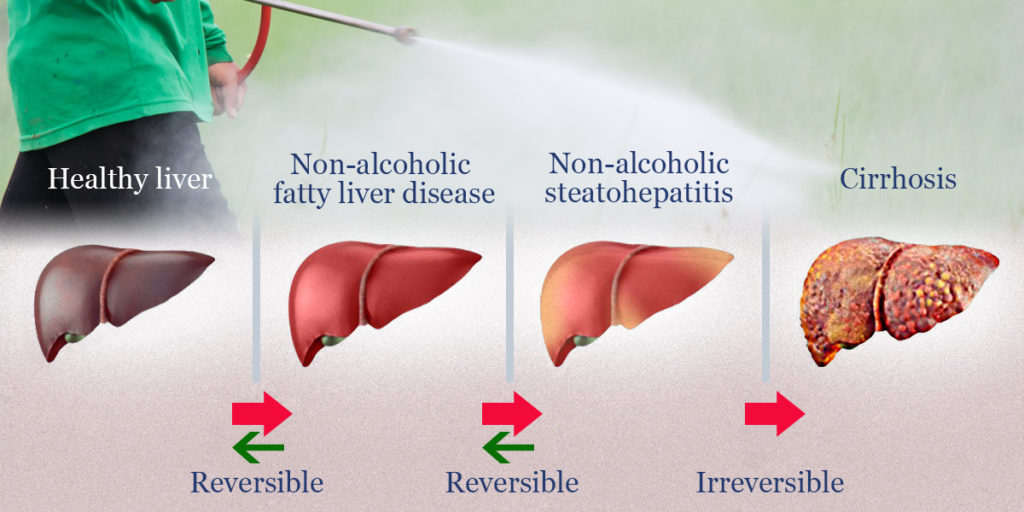
In recent newsletter articles I have discussed the significant growing health issue of NAFLD – Non-Alcoholic Fatty Liver Disease which is now present in approximately 25% of the general population.

From the website: GMWatch.org:

“Risk factors for NAFLD include being overweight or obese, having diabetes, or having high cholesterol or high triglycerides (a constituent of body fat) in the blood. However, some people develop NAFLD even if they do not have any of these known risk factors.

Symptoms of NAFLD include fatigue, weakness, weight loss, loss of appetite, nausea, abdominal pain, spider-like blood vessels, yellowing of the skin and eyes (jaundice), itching, fluid build-up and swelling of the legs and abdomen, and mental confusion”.

Excessive consumption of sugar – especially fructose can also contribute to the development of NAFLD.

Another potential cause of the dramatic increase in the incidence of NAFLD in the general population is exposure to glyphosate, present in the herbicide Roundup:

From the same article mentioned above from GMWatch.org:

Roundup causes non-alcoholic fatty liver disease at very low doses

“The weedkiller Roundup causes non-alcoholic fatty liver disease at very low doses permitted by regulators worldwide, a new peer-reviewed study shows. The study is the first ever to show a causative link between consumption of Roundup at a real-world environmentally relevant dose and a serious disease”.

Read More

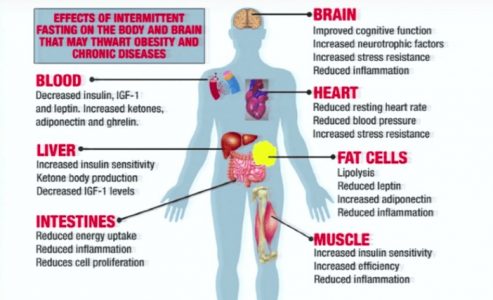
Some recent dietary and eating pattern trends have been shown to have positive benefits on health for many individuals.

The specific trends I am referring to include: low carb diets, intermittent fasting and compressed windows of feeding (such as 8/16 hours: eating during  a period of 8 hours and fasting for 16 hours.)

The following article from Natural News highlights some of the recent studies and health benefits of intermittent fasting.

I am sure many of you may have tried intermittent fasting yourselves and have recommended it to your patients: I certainly count myself in with this group, and I have seen some significant health benefits in some patients.

In the article, it highlights a specific study done at Harvard which was published in the journal Cell Metabolism.

Here is one of the key takeaways from the study:

“Manipulating mitochondrial networks inside cells — either by dietary restriction or by genetic manipulation that mimics it — may increase lifespan and promote health, according to new research from Harvard T.H. Chan School of Public Health.”

Read More

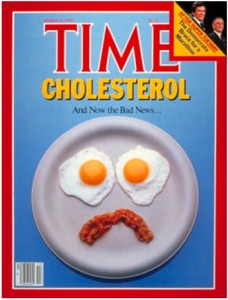
Further published research supports the fact that dietary fat consumption does NOT cause Heart Disease: A recently published meta-analysis (analysis of multiple published studies) supports this. The original research suggesting that dietary (saturated) fat contributed to heart disease fat which is described as the “Diet/Heart (Disease) Hypothesis” was flawed (the original researcher Ancel Keys, selectively chose data results which supported his hypothesis and excluded considerable data which showed it was not true!

Here is a summary on this recent analysis:

New Evidence Reveals that Saturated Fat Does Not Increase the Risk of Cardiovascular Disease

In light of new scientific data, it appears that saturated fat is not associated with an increased risk of cardiovascular disease (CVD).
Andrew Mente Andrew Mente, PhD

Highlights

Assistant Professor, Department of Clinical Epidemiology and Biostatistics, McMaster University

Present evidence suggests that saturated fat does not increase the risk of cardiovascular disease.
No causal relationship has been established between milk products and cardiovascular risk.
Factors associated with an increased risk of coronary heart disease include trans fatty acids and high glycemic-index foods.

Part of the confusion comes from the food and processed oils industry creating misinformation to confuse the general public.

Note the last point in the summary: high glycemic-index foods are carbohydrates/sugars which can be a major contributor to not only heart disease but also diabetes, non-alcoholic fatty liver disease etc. https://www.dairynutrition.ca/…/new-evidence-reveals-that-s…

Today I want to share with you an excellent in depth article from the blog of Dr. Gabriel Cousins, MD. which discusses the disastrous advent of 5G wireless technology.

This technology is predicted to create significant health issues for humanity: from the article below, here are some of the suggested consequences.

Effects include:

Damage goes well beyond the human race, as there is abundant evidence of harm to diverse plant- and wildlife[xl] [xli] and laboratory animals, including ants,[xlii] birds,[xliii] [xliv] forests,[xlv] frogs,[xlvi] fruit flies,[xlvii] honey bees,[xlviii] insects,[xlix] mammals,[l] mice,[li] [lii] plants,[liii] rats,[liv] trees,[lv] and microbes.[lvi]

Read More

Copyright © 2019 R. V. Lamberton & Associates, All rights reserved

Genetic mutations (polymorphisms) of the MTHFR (methylenetetrahydrofolate) enzyme are common in the general population.

Estimates are that approximately 60% of the general population (including myself) possess this mutation which comes with a range of influence on such important metabolic processes as methylation* pathway impairment, the potential buildup of homocysteine levels etc.)

* For those of you who read my newsletter that are not health care practitioners here is a simple explanation of methylation from the website: Mindbodygreen:

What is methylation? Without getting too technical, methylation is the addition of a single carbon and three hydrogen atoms (called a methyl group) to another molecule. The removal of a methyl group is called demethylation. Think of billions of little on/off switches inside your body that control everything from your stress response and how your body makes energy from food, to your brain chemistry and detoxification. That’s methylation and demethylation.

Typically if the MTHFR polymorphism is negatively impacting on methylation function, one of the approaches to improve this is for the individual to supplement with 5-methyltetrahydrofolate (5-methyl THF) – which is something that I personally do.

The reason this is done is that with this polymorphism the biochemical pathway step which involves converting 5,10-methylenetetrahydrofolate to 5-methyltetrahydrofolate (5-methyl THF), the primary circulatory form of folate utilized in homocysteine remethylation to methionine is impaired.  By consuming the end product – 5-methyl THF you are consuming the end product and not worrying about the impaired conversion to make the end product – 5-methyl THF.

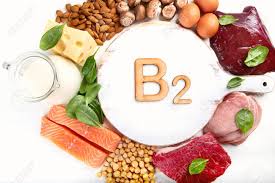
The following article suggests that by simply supplementing with Riboflavin (Vitamin B2) that the additional Riboflavin can make the enzyme necessary for this conversion to work like normal.

Supplementing with 5-methyl THF certainly works, however many readers I am sure would agree that targeting and resolving the cause of the problem
(the enzymatic conversion of 5,10-methylenetetrahydrofolate to 5-methyltetrahydrofolate (5-methyl THF) makes more sense – rather than targeting the effect.

In addition,  5-methyl THF is typically a practitioner grade supplement which the general population would not typically have access to – and most in this population would not understand the biochemistry/biochemical pathways involved and may actually exacerbate an existing problem (for example, initiating overmethylation can disrupt neurotransmitter balance).  Also 5-methyl THF is much more expensive vs. Riboflavin, a common and accessible B vitamin.

Many comprehensive B vitamin complexes may in fact have enough Riboflavin content to meet this need, and I am of the opinion that it is always best to take balanced ratios of the B vitamins – unless there is a specific identified need for a larger amount of a specific B vitamin(s).

Read More

Copyright (C) 2019 R. V. Lamberton & Associates All rights reserved.