Bauhinia forficata (Pata de Vaca): A Rain-Forest Botanical for Metabolic Regulation and Longevity Support
By Rob Lamberton, BSc, FNTP, FDN-P (Candidate)
Bauhinia forficata (commonly known as Pata de Vaca or “Cow’s Foot”) has long been utilized in traditional South American herbal medicine as a “Vegetable Insulin” for blood-sugar support and detoxification.
Recent studies confirm its capacity to modulate glucose metabolism through multiple mechanisms: AMPK activation, α-glucosidase inhibition, and hepatoprotective antioxidant activity.
The flavonoid kaempferitrin, the plant’s primary bioactive compound, exhibits strong insulin-mimetic action and antioxidant properties.
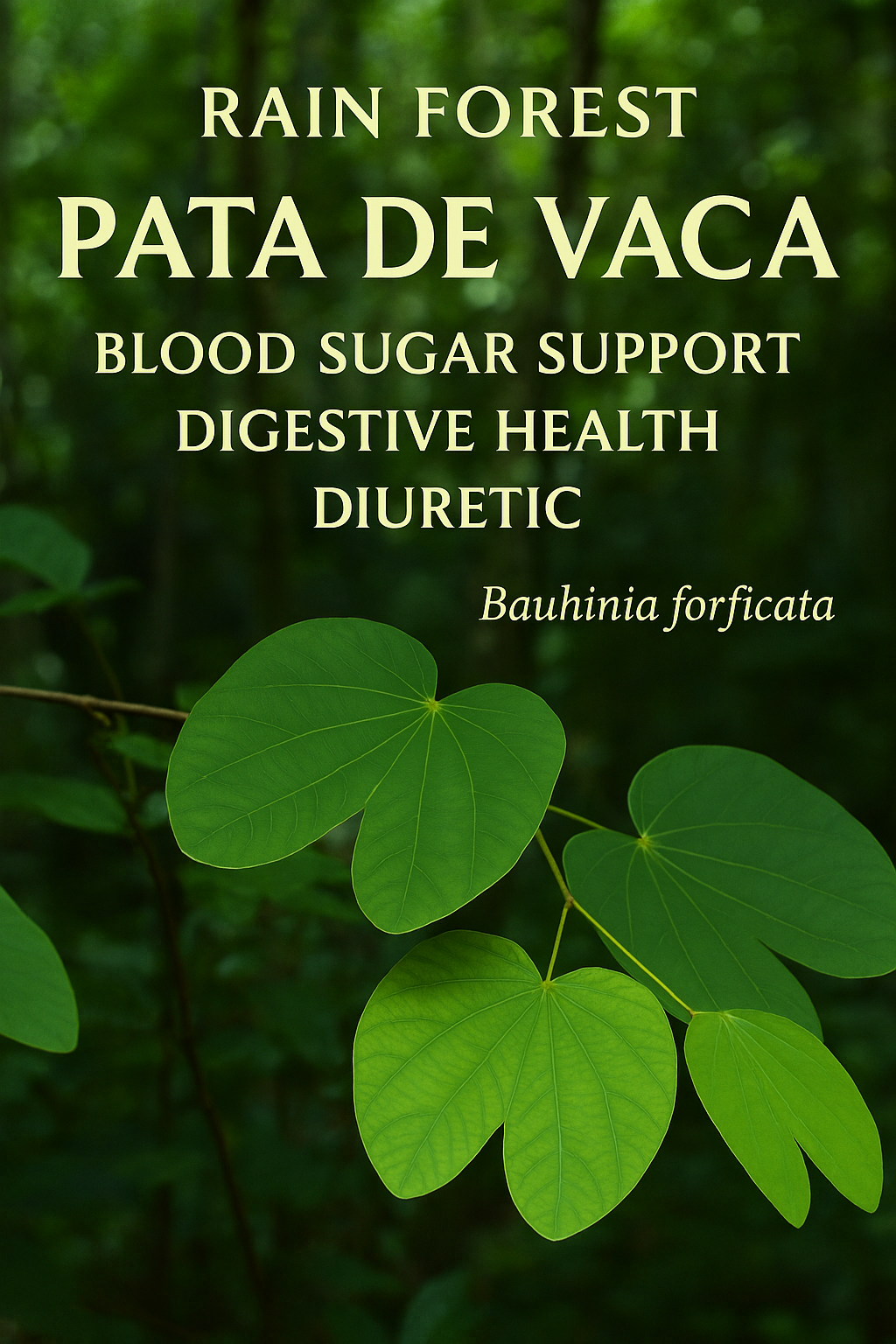
The tropical Rain Forest species Bauhinia forficata Link (Fabaceae) — colloquially called Pata de Vaca — is native to Brazil, Argentina, and neighboring regions. Its bilobed leaves resemble a cow’s hoof, hence the name.
Traditionally, decoctions of the leaves have been used for hyperglycemia, urinary inflammation, and hepatic congestion.
Modern biochemical studies corroborate these uses, identifying B. forficata as a potent AMPK activator and antioxidant botanical that supports insulin signaling, glucose uptake, and hepatic detoxification
The botanical’s reputation as “Vegetable Insulin” arises from its demonstrated ability to reduce post-prandial glucose and improve glycemic control in pre-diabetic and insulin-resistant subjects. Its pharmacological breadth aligns with contemporary integrative-medicine strategies that address metabolic dysfunction, mitochondrial oxidative stress, and systemic inflammation.
Clinical Evidence and Traditional Validation
Experimental and human data support B. forficata’s glucose-regulating effects.
Traditional herbalists in Brazil and Argentina have long used Pata de Vaca for hyperglycemia, liver sluggishness, and urinary issues, prescribing it as a gentle detoxifying and glycemic-balancing tea. The modern evidence base now substantiates these applications.
Safety and Regulatory Note:
The herb is generally recognized as safe in traditional use and pre-clinical research, though long-term human studies remain limited. Practitioners should exercise caution when combining B. forficata with pharmacologic hypoglycemics or during pregnancy.
Integrative and Clinical Implications
B. forficata bridges traditional ethnomedicine and modern biochemical validation. It addresses key mechanisms within the Metabolic Chaos™ framework—oxidative stress, hepatic detoxification inefficiency, and impaired glucose metabolism—while supporting HPA-axis balance through its antioxidant and adaptogenic flavonoids.
For clinicians, it may be incorporated as an adjunct in protocols for early-stage insulin resistance, metabolic inflammation, and oxidative liver stress.
Conclusion
The research base for Bauhinia forficata substantiates its long-standing traditional role as a “Vegetable Insulin.” Through AMPK modulation, antioxidant protection, and hepatic support, it contributes meaningfully to the growing integrative focus on metabolic resilience and healthy aging.
As both a clinically validated herb and a compelling Rain-Forest ingredient story, it holds value for practitioners, formulators, and manufacturers seeking to merge traditional wisdom with modern nutritional science.
ProductFormulation #FunctionalMedicine #NutraceuticalInnovation #RobLamberton #RobertLamberton